A Friendly Guide to Kids Eating the Same Food Every Day
Many kids go through phases where they want the same breakfast, the same snack, and the same dinner on repeat. This guide explains when repetition is a normal comfort habit, when it can affect nutrition, and how to widen variety gently—without turning meals into a daily battle.
Why “food repeats” happen
Repeating the same foods can look puzzling from an adult perspective, but for kids it often serves a purpose—especially during high-change seasons like a new school year, a move, or a growth spurt.
- Comfort and predictability: familiar foods reduce stress, especially during busy school weeks or big life changes.
- Developing independence: choosing the same food can be a simple way for a child to feel in control.
- Sensitive taste and texture preferences: some kids strongly prefer specific crunchiness, temperature, or flavors.
- Routine and exposure: kids often repeat foods they have been offered often and know will be available.
- Energy and appetite patterns: after growth spurts or illness, a child may cling to easy-to-eat favorites.
Is it okay if a child eats the same food every day?
Often, yes—at least for a while. Many children “lock in” on a favorite food and still grow well, stay active, and meet nutrition needs over the course of a week.
- It’s often okay short-term if overall nutrition is covered across the week and the child is growing and energetic.
- Repetition becomes more concerning when a child’s menu is very narrow (few foods total) or excludes major food groups.
- A single “everyday food” can fit into a balanced pattern when paired with rotating sides, fruits/vegetables, and protein options.
- Focus on patterns over perfection: the goal is nutritional coverage and a calm relationship with food, not constant novelty.
Quick check: when repeats are fine vs when to get extra support
| What you’re seeing |
Usually okay |
Consider extra help if… |
| Same breakfast daily (e.g., oatmeal) but lunch/dinner vary |
Yes—common and often nutritious |
Breakfast is the only reliably eaten meal and other meals are frequently skipped |
| Child eats 1–2 preferred dinners repeatedly |
Often—especially during picky phases |
Dinner options are fewer than ~10 total foods and shrinking over time |
| Refuses mixed textures (stews, casseroles) but eats several single foods |
Can be normal preference |
Gagging, intense distress, or strong avoidance across many textures |
| Avoids vegetables but eats fruit |
Common |
No fruits/vegetables at all plus low fiber and frequent constipation |
| Strong brand/shape demands (only one exact product) |
Sometimes a phase |
Rigidity disrupts daily life, causes meltdowns, or limits intake outside the home |
What to watch for: nutrition and well-being
If a child repeats foods, the big question is whether the pattern supports health and daily functioning. A few practical “spot checks” can help you decide whether to stay the course or adjust.
- Growth and energy: steady growth curve and normal activity are reassuring signs.
- Common nutrient gaps: protein, iron, calcium, vitamin D, and fiber are frequent misses in narrow diets—look for easy ways to cover them.
- Body clues: constipation, fatigue, frequent illness, or dental issues can signal a diet pattern that needs adjustment.
- Hydration matters: repeated salty or dry foods can displace fluids and fiber.
- Mealtime stress counts too: pressure can backfire and increase refusal, even when the “plan” is nutritious.
For reliable nutrition basics and age-based guidance, see resources from American Academy of Pediatrics (HealthyChildren.org) and the CDC nutrition hub.
Gentle strategies to expand variety (without power struggles)
Variety tends to grow best when kids feel safe and un-pressured. Instead of aiming for big, dramatic changes, think “tiny experiments, repeated often.”
Easy variety: add-ons for the same favorite meal
Simple side swaps that keep the main food the same
| Favorite main |
Side option A |
Side option B |
Side option C |
| Mac and cheese |
Steamed peas |
Apple slices |
Cucumber rounds + yogurt dip |
| Chicken nuggets |
Roasted sweet potato wedges |
Grapes |
Corn + black beans |
| PB sandwich (age-appropriate) |
Banana |
Carrot sticks |
Greek yogurt |
| Rice bowl |
Scrambled egg |
Edamame |
Mango or pineapple |
| Oatmeal |
Berries |
Chia or ground flax |
Cinnamon + sliced pear |
When to talk to a pediatrician or feeding specialist
A calm, practical resource for parents and caregivers
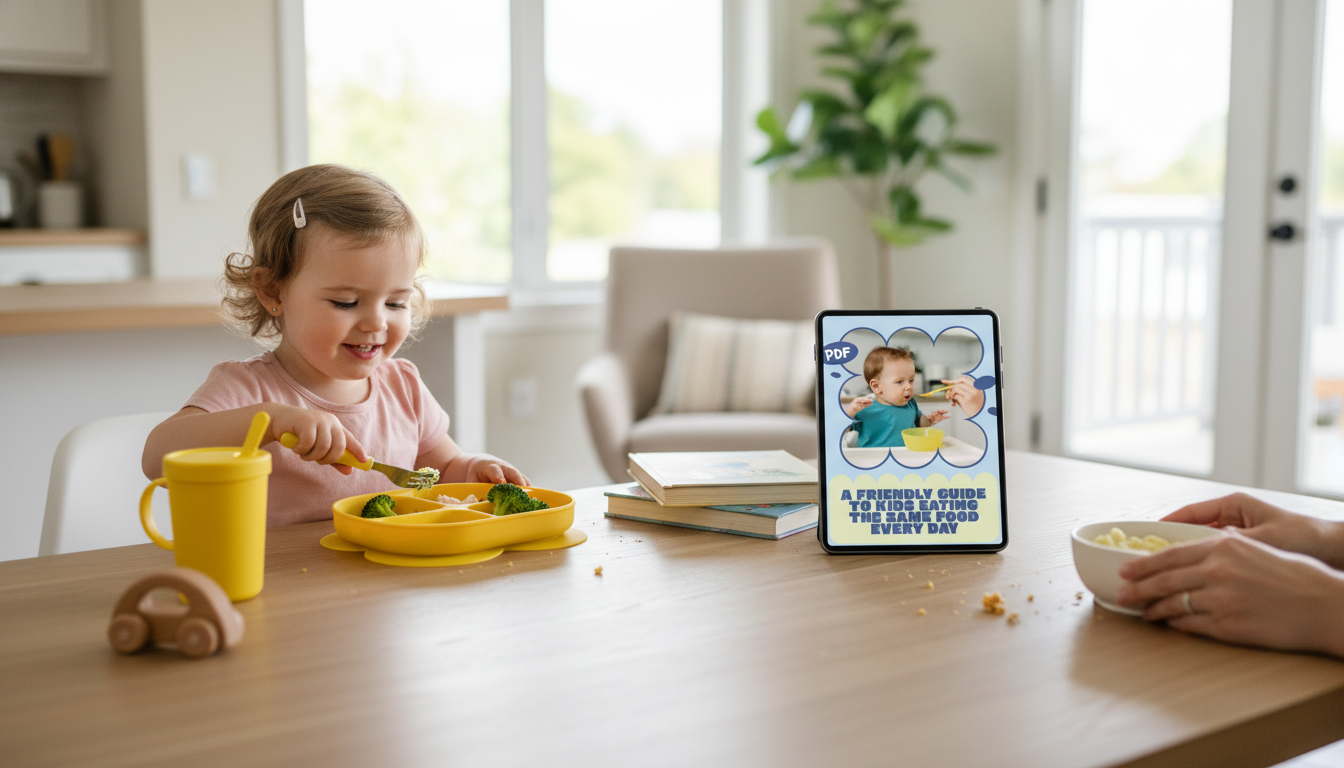
If you want a simple plan that stays low-pressure while still moving toward better variety, A Friendly Guide to Kids Eating the Same Food Every Day (digital eBook) walks through common scenarios (like “only one dinner,” “same lunch every day,” or “texture refusals”) with step-by-step strategies and realistic routines.
For families who also like straightforward, compare-and-decide style guides in one place, Hybrid vs Electric Made Simple | Easy Hybrid vs Electric Comparison Guide for Smart Car Buyers is another digital resource available in the shop.
FAQ
Will my child get nutrient deficiencies from eating the same food every day?
It depends on how narrow the overall menu is across the week and whether major food groups are included. Watch common gaps like iron, calcium, vitamin D, and fiber, and use your child’s growth and energy as real-world signals; bring concerns to your pediatrician.
How can variety be introduced without making picky eating worse?
Keep a safe food on the plate and add a tiny “learning food” with zero pressure or bargaining. Small category swaps (different sauce, side, or shape) and repeated exposure usually work better than big changes.
When is eating the same food a sign of a feeding disorder?
Red flags include a shrinking list of accepted foods, intense distress or gagging, weight/growth concerns, extreme rigidity that disrupts daily life, or difficulty eating outside the home. In those cases, talk with a pediatrician and consider a registered dietitian or feeding therapist.
Recommended for you












Leave a comment