Bye-Bye Diaper Rash: A Natural Prevention Checklist for Daily Baby Care
Diaper rash often starts with small, preventable irritations: moisture held against skin, friction, and exposure to urine or stool. A simple routine—done consistently—can reduce flare-ups and help keep baby’s skin calm. Use the checklist approach below to build habits that fit daytime changes, naps, and overnight stretches.
What’s Really Causing Diaper Rash (and Why Prevention Works)
Most diaper rashes aren’t caused by “dirty diapers” so much as an irritated skin barrier that gets overwhelmed. A few common triggers tend to stack on top of each other:
- Moisture + occlusion: diapers trap humidity, softening skin and making it easier to irritate.
- Friction: rubbing from diapers, wipes, or tight fit can break down the skin barrier.
- Irritant contact: urine and stool raise skin pH; enzymes in stool can inflame sensitive areas.
- Yeast can follow: after irritation, Candida can overgrow, especially in warm, damp skin folds.
- Prevention works best with three goals: keep skin clean, keep it dry, and protect it with a barrier.
For clinical overviews and photos of common diaper rashes, see guidance from the American Academy of Pediatrics and the Mayo Clinic.
Daily Natural Prevention Routine (Quick, Repeatable Steps)
Consistency beats complexity. The goal is to make each change a mini “reset” for the skin.
- Change promptly: aim for frequent changes, especially after bowel movements.
- Clean gently: use warm water and a soft cloth or fragrance-free, alcohol-free wipes; avoid scrubbing.
- Pat dry: let skin fully dry before re-diapering; add brief air-dry time when possible.
- Use a barrier each time if baby is prone to rash: apply a thin, even layer to high-friction areas.
- Choose breathable, well-fitting diapers: avoid tight elastics that leave deep marks.
- Wash hands before and after changes: reduces transfer of irritants and microbes.
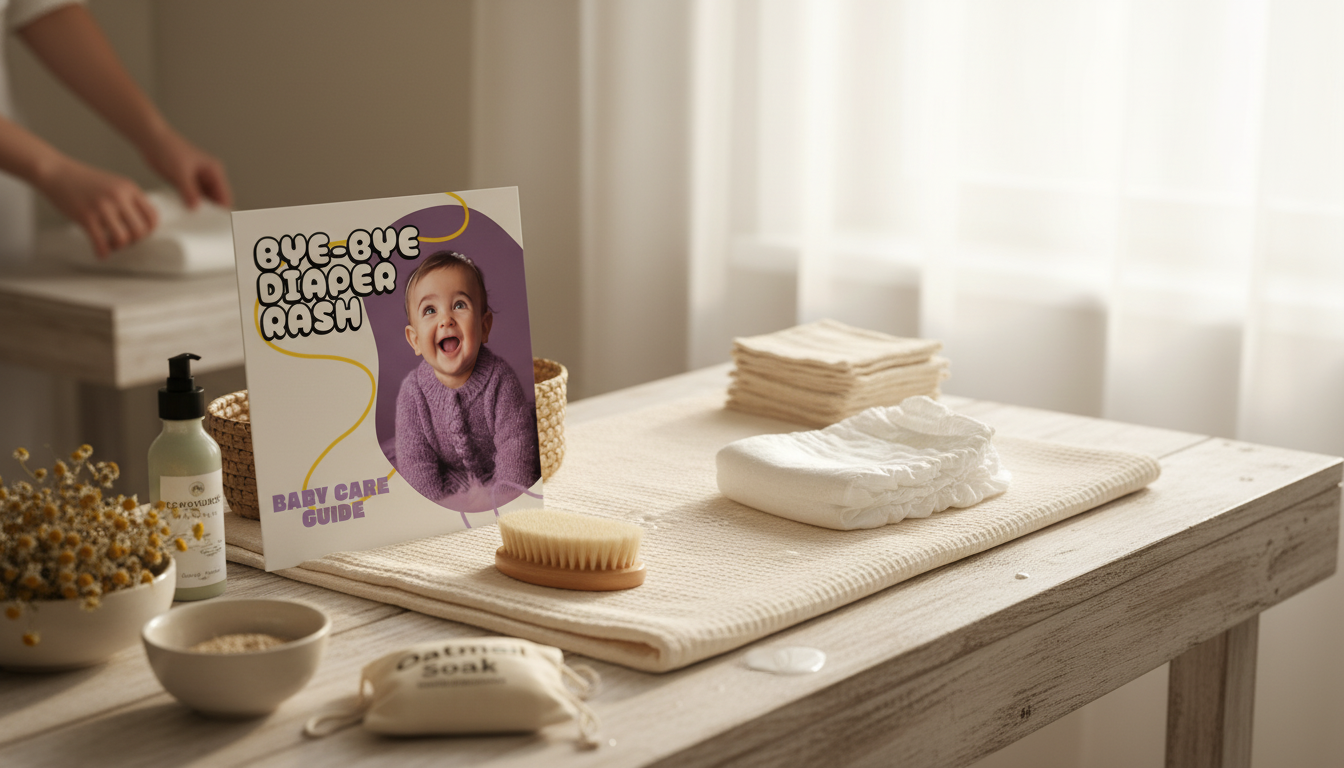
If you want an easy, repeatable routine that caregivers can follow without guesswork, the printable guide Bye-Bye Diaper Rash: Your Natural Prevention Checklist (printable digital download) is designed to be kept at the changing station or shared with daycare.
Printable Checklist: Change-Time Habits That Make the Biggest Difference
Small setup choices reduce “rushed changes,” which is when rashes tend to flare. These habits keep care steady whether it’s a quick pee diaper or a messy blowout:
- Set up a consistent changing station: clean surface, dry cloths, barrier cream/ointment, spare diaper, disposal bag.
- Use the “clean–dry–protect” sequence every change: even when skin looks fine.
- Keep wipes simple: fewer ingredients is often better for sensitive skin.
- Avoid powders that can be inhaled: focus on drying through air time and absorbent diapers.
- Track patterns: rashes often correlate with new foods, diarrhea, antibiotics, or brand changes.
Natural Diaper Rash Prevention Checklist (Print-Friendly)
| Step |
What to do |
How often |
| 1. Check |
Check diaper for wetness/soiling; inspect creases and skin folds |
Every 2–3 hours and after bowel movements |
| 2. Clean |
Rinse/clean with warm water or gentle wipes; avoid vigorous rubbing |
Every change |
| 3. Dry |
Pat dry; allow 30–60 seconds of air time if possible |
Every change |
| 4. Protect |
Apply a thin barrier layer to areas that tend to redden |
Every change for prone skin; otherwise as needed |
| 5. Fit |
Ensure diaper isn’t too tight; fasten to allow airflow |
Every change |
| 6. Reset |
Wash hands; clean changing surface if soiled |
Every change |
Choosing Gentle Products: What to Look For (and What to Skip)
“Natural” doesn’t always mean gentler—what matters is how predictable and non-irritating the formula is for baby’s skin.
Night changes are often when skin stays wet the longest. A soft, warm light can make it easier to do a thorough clean–dry–protect routine without fully waking the household; a cozy nursery corner setup can include gentle lighting such as the Nordic Feather Floor Lamp.
Natural Comfort Measures for Mild Redness
During colder months, caregivers often rush changes because the room feels chilly—having a warm layer nearby can help you slow down enough to pat dry properly and apply barrier evenly. Something easy to slip on, like the Romantic Knit Long-Sleeve Fishtail Sweater Dress for Fall and Winter, can make midnight routines more comfortable.
When to Suspect Yeast or Something Else (and When to Get Help)
For additional medical guidance on when to seek care, the Cleveland Clinic’s diaper rash overview is a helpful reference.
Make It Easy: A Ready-to-Print Routine for Caregivers
For a caregiver-friendly version you can print, text, or store on a phone, use Bye-Bye Diaper Rash: Your Natural Prevention Checklist (printable digital download).
FAQ
How often should diapers be changed to prevent diaper rash?
Aim to check every 2–3 hours and change promptly after bowel movements. If baby is having frequent stools, more frequent changes plus a barrier at each change can help keep skin dry and protected.
What’s the gentlest way to clean during frequent poops without making skin worse?
Use warm water and a soft cloth (or very simple, fragrance-free wipes), then pat dry instead of rubbing. Add brief air-dry time and apply a protective barrier so skin isn’t exposed to friction and moisture.
When should diaper rash be checked by a doctor?
Seek medical advice if the rash isn’t improving after 2–3 days, is spreading, or comes with fever, blisters, pus/oozing, or significant pain. Also call if you suspect yeast (especially in skin folds) since an antifungal may be needed.
Recommended for you












Leave a comment