Self-confidence rarely arrives as a single breakthrough. It’s built through repeated experiences of trying, adjusting, and showing up again—exactly what sports practice every week. From learning a new skill to handling pressure in real time, sports create a feedback loop that strengthens body trust, decision-making, and resilience in everyday life.
Why sports build confidence faster than “positive thinking” alone
Positive thinking can help, but it often stays abstract. Sports make confidence concrete by turning intention into action—then showing you the results. When you commit to practice, you’re not just “hoping” to feel braver; you’re collecting proof that you can do hard things.
- Action beats affirmation: Confidence grows when actions consistently match intentions, and sports provide immediate opportunities to act.
- Skill replaces uncertainty: Drills and repetition turn “I can’t” into “I’m learning,” and measurable progress turns that learning into competence.
- Pressure becomes safe: Structured challenges normalize mistakes. They’re expected, corrected, and treated as part of development—not a personal failure.
- Community reinforces effort: Team settings add accountability and social reinforcement that many solo goals lack.
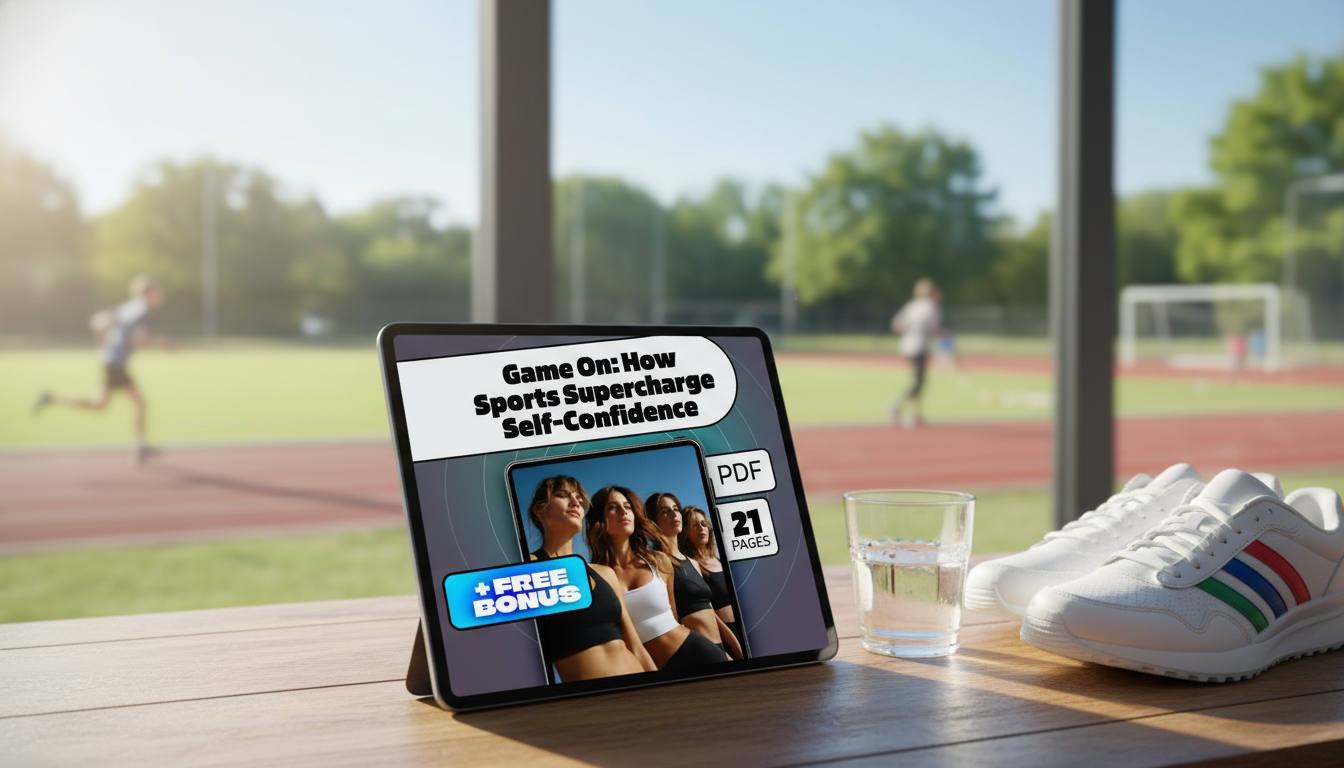
For a deeper, structured read on using athletics as a confidence engine, explore Game On: How Sports Supercharge Self-Confidence.
The confidence loop: effort, feedback, improvement, belief
Sports confidence is durable because it’s built on a repeatable cycle. Each round strengthens self-trust and makes the next challenge feel more doable.
- Effort: committing to practice builds self-trust (“I follow through”).
- Feedback: coaches, teammates, and performance cues (time, score, form) clarify what’s working.
- Improvement: small wins compound—cleaner technique, better stamina, smarter choices.
- Belief: progress becomes evidence; confidence becomes grounded rather than wishful.
How sports moments translate into real-life confidence
| Sports experience |
What it trains |
How it shows up outside sports |
| Learning a new skill (serve, shot, routine) |
Growth mindset and patience |
Trying new tasks at work/school without avoiding discomfort |
| Competing under pressure |
Emotional regulation and focus |
Staying calm during interviews, presentations, hard conversations |
| Handling mistakes in real time |
Resilience and rapid recovery |
Bouncing back after criticism or setbacks |
| Working with a team |
Communication and belonging |
Speaking up, collaborating, setting boundaries respectfully |
| Tracking performance (reps, pace, scores) |
Self-efficacy through evidence |
Setting goals and trusting progress even when motivation dips |
Confidence in the body: posture, presence, and physical competence
There’s a specific kind of confidence that comes from feeling capable in your own body. Athletic training builds “body confidence”—the sense that your body can handle effort, recover, and adapt. Over time, that can change how you carry yourself, not as a performance, but as a natural byproduct of competence.
- Physical capability boosts presence: improved coordination and strength often lead to better posture and movement quality.
- Mood becomes more stable: regular activity supports stress management, making confidence easier to access under pressure. The American Psychological Association highlights exercise as a practical tool for managing stress.
- Fundamentals create a foundation: breathing, balance, and rhythm teach steadiness you can bring into everyday routines (walking into a meeting, taking the stairs, speaking clearly).
Even small training upgrades—like learning to brace your core, land softly, or pace your breathing—can change how “prepared” you feel in ordinary moments.
The social side: belonging, leadership, and healthy comparison
Confidence grows faster when you’re not doing everything alone. Teams and classes provide built-in belonging: familiar faces, shared rituals, and a reason to keep showing up even on low-motivation days.
- Belonging reduces self-doubt: being part of a group can soften the inner narrative that you’re “behind” or “not cut out for it.”
- Leadership emerges naturally: organizing warmups, mentoring a beginner, or calling plays teaches assertiveness without forcing it.
- Comparison can be healthy: when reframed as learning (“What can I borrow from their approach?”), it becomes motivation rather than self-criticism.
- Environment matters: confidence grows best where effort is respected and mistakes aren’t punished socially.
Resilience training: losing, plateaus, and coming back stronger
Sports don’t only build confidence when things go well. They build it when things go poorly—and you return anyway.
The CDC also notes broad physical and mental health benefits from regular activity—helpful support when stress and low confidence feed into each other.
Choosing the right sport for confidence (based on personality and goals)
Feeling comfortable in what you wear can also lower the “spotlight effect” when you’re new. A simple, movement-friendly option like the Romantic Knit Long-Sleeve Fishtail Sweater Dress for Fall and Winter can help you focus on participation rather than self-consciousness—especially for casual leagues, spectating, or post-practice plans.
Simple habits that make sports confidence stick
A practical guide for turning play into lasting self-confidence
FAQ
Which sport is best for building self-confidence?
The best sport is the one that feels safe enough to start and structured enough to show progress. For social confidence, try recreational leagues; for body confidence, strength training or Pilates; for performance confidence under pressure, tennis, golf, or track can be a great fit.
How long does it take for sports to improve confidence?
Small shifts often show up after a few sessions (better mood, less hesitation), while deeper self-trust tends to build over consistent weeks. The clearest changes come when you track progress—reps, form cues, times, or simply showing up on schedule.
What if fear of embarrassment keeps someone from joining a team or class?
Start with beginner programs or skill clinics, bring a friend, and use process goals like “attend twice this week” instead of “be good.” When mistakes happen, use a quick reset—one slow breath, a simple cue word, then focus on the next play.
Recommended for you













Leave a comment