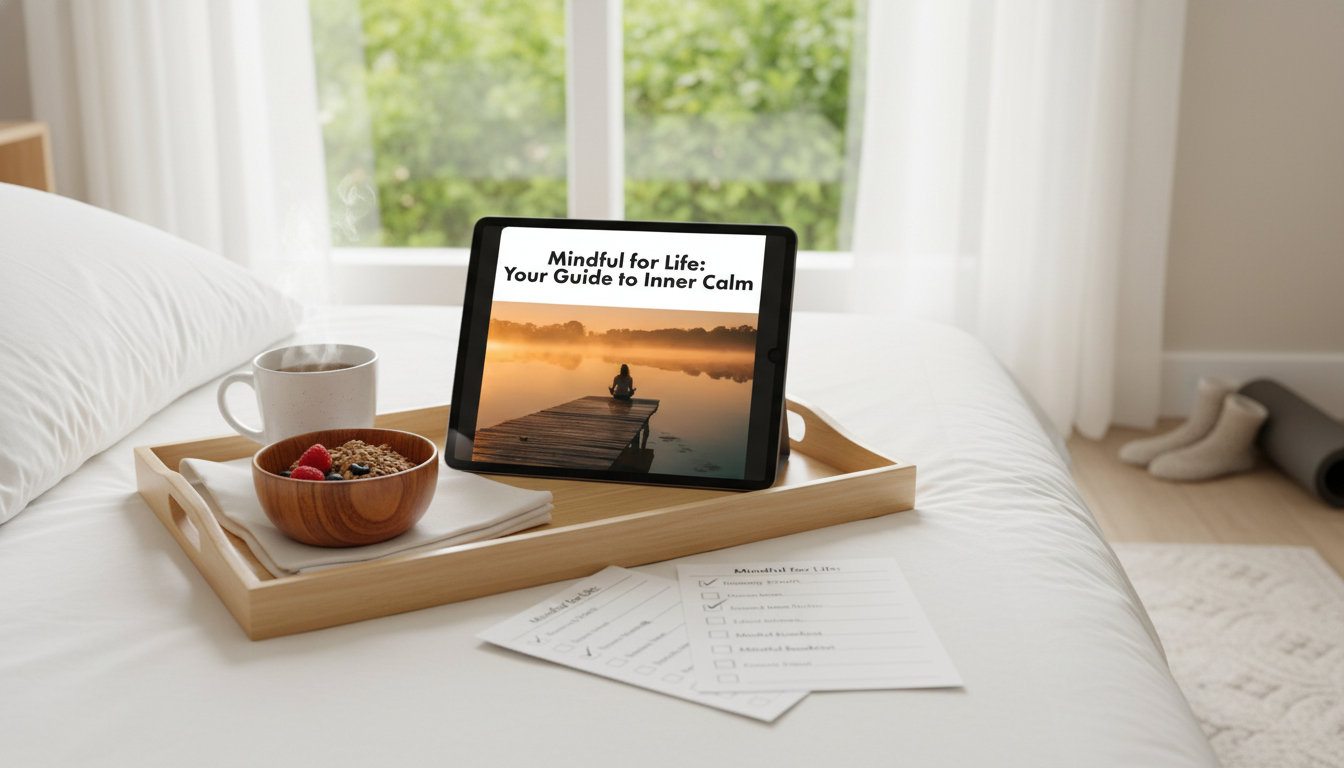
Mindful for Life: A Long-Term Lifestyle Guide to Inner Calm (Digital Download eBook + Checklist)
A calmer mind isn’t built only in perfect, quiet moments—it’s built through small, repeatable choices on ordinary days. Mindful for Life: Your Long-Term Lifestyle Guide to Inner Calm | Digital Download eBook, Checklist & Long-Term Mindfulness Lifestyle Guide for Daily Calm and Balance is designed to make mindfulness feel practical and livable, with simple routines, quick resets, and longer practices you can return to over time. Instead of treating mindfulness like a one-off session you “try to fit in,” this guide helps you build a steady rhythm that supports balance through busy weeks, changing seasons, and real-life stress.
What “Mindful for Life” is designed to do
This digital guide is built for consistency—without rigidity. The goal is to help mindfulness become a default way of meeting your day, not another item on your to-do list.
- Translate mindfulness into daily habits rather than occasional sessions
- Provide structure with clear steps, prompts, and checklists that reduce decision fatigue
- Support consistency with flexible routines for mornings, workdays, evenings, and weekends
- Help identify personal stress patterns and build calmer default responses over time
- Fit real schedules with short practices for busy days and deeper options when time allows
For a research-backed overview of mindfulness benefits and safety considerations, see the National Center for Complementary and Integrative Health (NCCIH) and the American Psychological Association (APA).
What’s included in the digital download
Mindfulness can feel vague when it’s only presented as a concept. This download keeps it concrete: what to do, when to do it, and how to restart when life gets messy.
- eBook guidance for building a long-term mindfulness lifestyle (not just isolated techniques)
- Checklists for daily grounding, weekly reflection, and “reset” moments during stress
- Step-by-step prompts for attention training: breath, body, thoughts, emotions, and environment
- Habit-building supports: cues, tracking ideas, and gentle ways to restart after missed days
- Printable or device-friendly format for quick reference at home, work, or while traveling
At-a-glance: parts of the guide and how they’re used
| Part |
Best time to use it |
Outcome to aim for |
| Core principles |
Start of the program, then revisit monthly |
A clear, realistic approach to sustainable practice |
| Daily calm checklist |
Morning or mid-day |
A steadier baseline and fewer reactive moments |
| Stress reset checklist |
During overwhelm, before difficult conversations |
Faster recovery and clearer next steps |
| Weekly reflection prompts |
End of week (10–15 minutes) |
Spot patterns and refine habits without self-criticism |
| Long-term lifestyle plan |
Monthly/quarterly review |
Practices that evolve with seasons, workload, and goals |
A simple long-term rhythm (daily, weekly, monthly)
Long-term calm tends to come from repetition and ease. A reliable rhythm can be short and still effective—especially when it’s anchored to routines you already have.
- Daily: 3–10 minutes of attention practice plus one mindful moment anchored to an existing routine (coffee, commute, shower)
- Daily: a “pause-and-name” step—label the present emotion or sensation before responding
- Weekly: reflect on what triggered stress, what helped, and what to repeat next week
- Monthly: choose one focus area (sleep, boundaries, digital habits, movement, self-talk) and keep it small
- Seasonal: adjust expectations during travel, deadlines, or family changes so mindfulness stays supportive—not another task
A helpful way to keep this rhythm inviting is to make your environment feel calm and consistent. Soft, warm lighting can become an easy “cue” for your wind-down practice; a statement piece like the Nordic Feather Floor Lamp can help create a dedicated corner that signals “slow down” the moment you walk by.
How to start when life is busy: a 14-day gentle ramp-up
Starting is often the hardest part—not because the practices are complicated, but because it’s easy to overcommit. This ramp-up approach keeps the bar low so the habit has space to take root.
- Days 1–3: micro-practices (60–90 seconds) to build the “start” habit
- Days 4–7: one short sit (3–5 minutes) plus a checklist-based reset during the day
- Days 8–10: add body awareness (scan shoulders/jaw/hands) to notice stress earlier
- Days 11–14: practice mindful transitions (before work, before meals, before sleep) to reduce carryover tension
- Keep the bar low: consistency matters more than duration; missed days are built into the plan
If you like pairing mindfulness with cozy comfort (especially for evening routines), a soft seasonal staple can become an anchor: change into something comfortable, then do your quick reset. The Romantic Knit Long-Sleeve Fishtail Sweater Dress for Fall and Winter can help create that “transition” moment between work mode and rest mode.
Common obstacles—and practical ways around them
For an additional overview of meditation approaches and tips for getting started, the Mayo Clinic offers a helpful primer.
Who this guide fits best
Download, use, repeat: making it stick
If you’re ready to build a sustainable rhythm you can return to again and again, start here: Mindful for Life: Your Long-Term Lifestyle Guide to Inner Calm (Digital Download).
FAQ
How much time per day is enough to see benefits from mindfulness practice?
Consistency tends to matter more than duration: 3–10 minutes daily plus a few brief “micro-pauses” can be enough to notice changes over time. Benefits vary by person, stress level, and how regularly you practice.
Is this better for beginners or for people who already meditate?
It’s beginner-friendly because it provides clear steps and checklists, but it also works well for experienced meditators who want more structure and better habit support. The focus is long-term integration, not perfection.
What if sitting quietly makes me feel more anxious?
Start with shorter practices, emphasize grounding and body-based awareness, and consider trying open-eye mindfulness. If anxiety feels intense or persistent, professional support can help you find approaches that feel safer and more stabilizing.
Recommended for you











Leave a comment