Understanding Cat Separation Anxiety: Signs, Causes, and Gentle Ways to Help
Some cats handle alone time with ease, while others become distressed when a favorite person leaves. Separation anxiety can look like “bad behavior,” but it’s often a sign of fear, uncertainty, or an unmet need for security. Support works best when it focuses on predictability, comfort, and gradual skill-building—rather than punishment. Below are common signs, likely triggers, and compassionate steps that help many cats feel safer when they’re home alone.
What Separation Anxiety Can Look Like in Cats
It helps to separate everyday boredom from anxiety-driven behavior. Boredom usually shows up as mild mischief or attention-seeking that’s easy to redirect. Separation anxiety tends to be intense, repetitive, and closely tied to departures, time alone, or the moments right after you return.
Many cats show a “ramp up” as departure cues happen—watching you closely, becoming clingy, or getting restless when they notice keys, shoes, or the pre-leaving routine. Other cats are more subtle: they may shadow you from room to room, vocalize only after the house goes quiet, or refuse to settle in their favorite spot once you’re gone.
It’s also possible for separation anxiety to coexist with other concerns like pain, cognitive changes, urinary issues, or household stress. Any sudden behavior change deserves a full look rather than assuming it’s purely emotional.
Possible Signs and What They May Mean
| Sign |
Often Happens When |
What It Could Indicate |
| Excessive vocalizing (yowling, crying) |
After the home becomes quiet; near doors/windows |
Distress from isolation, seeking contact |
| Inappropriate urination/defecation |
Soon after being left alone; near entry points |
Anxiety, territorial insecurity, or medical issue (rule out) |
| Destructive scratching/chewing |
Near exit doors, blinds, window sills |
Frustration, escape attempts, self-soothing behavior |
| Over-grooming or hair loss |
During alone time or after routine disruptions |
Stress coping; can become a compulsive pattern |
| Loss of appetite when alone |
Meals served during alone time |
Stress suppressing appetite; negative association with solitude |
| Velcro behavior on return |
Immediately upon caregiver’s arrival |
Relief-seeking; difficulty self-regulating |
Why It Happens: Common Triggers and Risk Factors
Separation distress often follows a change that makes life feel less predictable. Common triggers include new work hours, travel, moving homes, or household members coming and going. Even positive changes can reduce a cat’s sense of routine.
Loss can be a major factor, too. If a person or animal companion has recently died or moved away, a cat may grieve and become more clingy—especially if their social world has suddenly shrunk.
Some cats thrive as only pets, while others rely heavily on social contact and frequent interaction. Early experiences can play a role as well: limited socialization, abrupt weaning, or unstable environments may increase sensitivity to separation. Finally, certain cats form very strong, person-focused attachments, making absences feel especially challenging.
Rule-Outs First: Health and Environment Checks That Matter
If you’re seeing changes in urination/defecation, appetite, grooming, or sleep—especially if it’s sudden—schedule a veterinary visit. Medical discomfort can lower stress tolerance and make alone time harder to cope with.
- Litter box basics: Aim for enough boxes (often one per cat plus one extra), placed in quiet locations away from loud appliances. Consider whether a recent litter change, new box, or new location could be a factor.
- Pain and discomfort: Arthritis, dental pain, and gastrointestinal issues can increase irritability and restlessness, and can overlap with anxiety signs.
- Environmental stressors: Outdoor cats visible through windows, construction noise, or tension between pets can amplify distress.
- Track timing: Note whether the behaviors cluster around departures or happen randomly throughout the day. Timing clues can guide the plan.
For additional behavior guidance and stress-related resources, see the American Association of Feline Practitioners (AAFP) Feline Behavior Guidelines, International Cat Care (iCatCare), and the ASPCA’s cat behavior resources.
A Compassionate Plan: Building Security Before, During, and After Alone Time
Think of the goal as teaching “alone-time skills” while making the home feel safer and more predictable.
Before you leave: strengthen routine and soften departure cues
During alone time: create a “safe zone” and lasting enrichment
After you return: keep reunions calm
Training and Enrichment Ideas for Lonely Cats
When to Get Extra Help: Behavior Professionals and Medication Options
A Guided Option for Step-by-Step Support
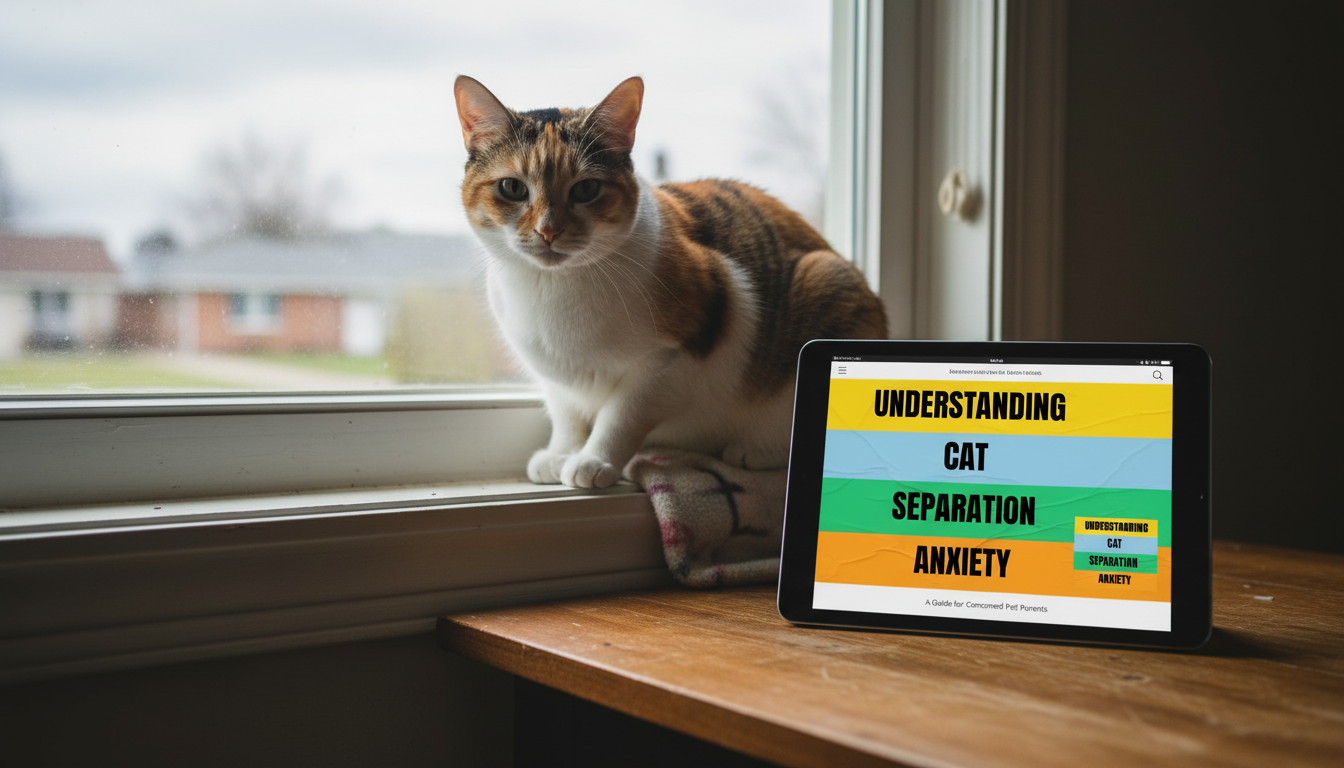
Progress is often faster when you can track patterns, identify triggers, and follow a consistent plan. If you’d like a structured approach with checklists and troubleshooting, consider this in-stock resource: Understanding Cat Separation Anxiety – Compassionate eBook Guide to Recognizing Cat Separation Anxiety Signs & Helping Lonely Cats Feel Secure.
For a calmer home environment during alone time, some caregivers also prefer softer ambient lighting as part of a predictable “quiet hours” routine: Nordic Feather Floor Lamp.
FAQ
How can separation anxiety be distinguished from boredom in cats?
Separation anxiety is usually tied to departure/return cues and shows intense, repetitive distress behaviors (like persistent vocalizing, elimination changes, or over-grooming). Boredom tends to be milder and easier to redirect. If the change is sudden or includes litter box or appetite shifts, a vet check is important.
Should a cat be comforted when vocalizing or acting clingy after being left alone?
Offer a calm, low-key reunion and reward relaxed behavior so your cat learns that settling is what brings good outcomes. You can still meet emotional needs with gentle attention, but try not to turn frantic behavior into the “main event.” Building predictable pre-leave and post-return routines usually helps most.
How long does it take to help a cat feel calmer when left alone?
Many cats improve over weeks to months, depending on severity, consistency, and other stressors in the home. Signs of progress include quicker recovery after you leave, less vocalizing, and more resting or eating while alone. Severe cases often benefit from professional support and, sometimes, medication.
Recommended for you












Leave a comment