Daily Tidy Routine: Small Steps That Make a Big Difference
A daily tidy routine keeps a home feeling calm without turning every day into a deep-clean marathon. The goal is to reset high-impact areas, prevent clutter from multiplying, and build a rhythm that fits real life—especially for busy households and minimalist-leaning spaces. When the “baseline” stays steady, mornings feel smoother, guests feel less stressful, and weekends don’t disappear into catch-up cleaning.
What a “daily tidy” is (and what it isn’t)
A daily tidy focuses on restoring order: clearing surfaces, returning items to their homes, and handling a few quick hygiene tasks that make the space feel fresh. It’s the fast reset that keeps your home functional and visually calm.
It is not the same as deep cleaning. Deep cleaning targets buildup—think grout, baseboards, inside appliances, or a full shower scrub—on a weekly or monthly cadence. The biggest payoff comes from consistency: small actions done daily reduce decision fatigue and help you avoid the weekend “where do I even start?” spiral.
Daily tidying also works best when every item has an obvious “home,” even if that home is a labeled bin or a single catch-all basket. When the home is unclear, tidying turns into shuffling piles from one spot to another.
Daily tidy routine steps (the minimalist house reset)
These steps are designed to stay short, repeatable, and forgiving. Aim for 10–20 minutes, and scale down on hard days.
- Start with a 2-minute reset: Open blinds, make the bed, and do a quick visual scan for out-of-place items. Light and “instant wins” change how the whole home feels.
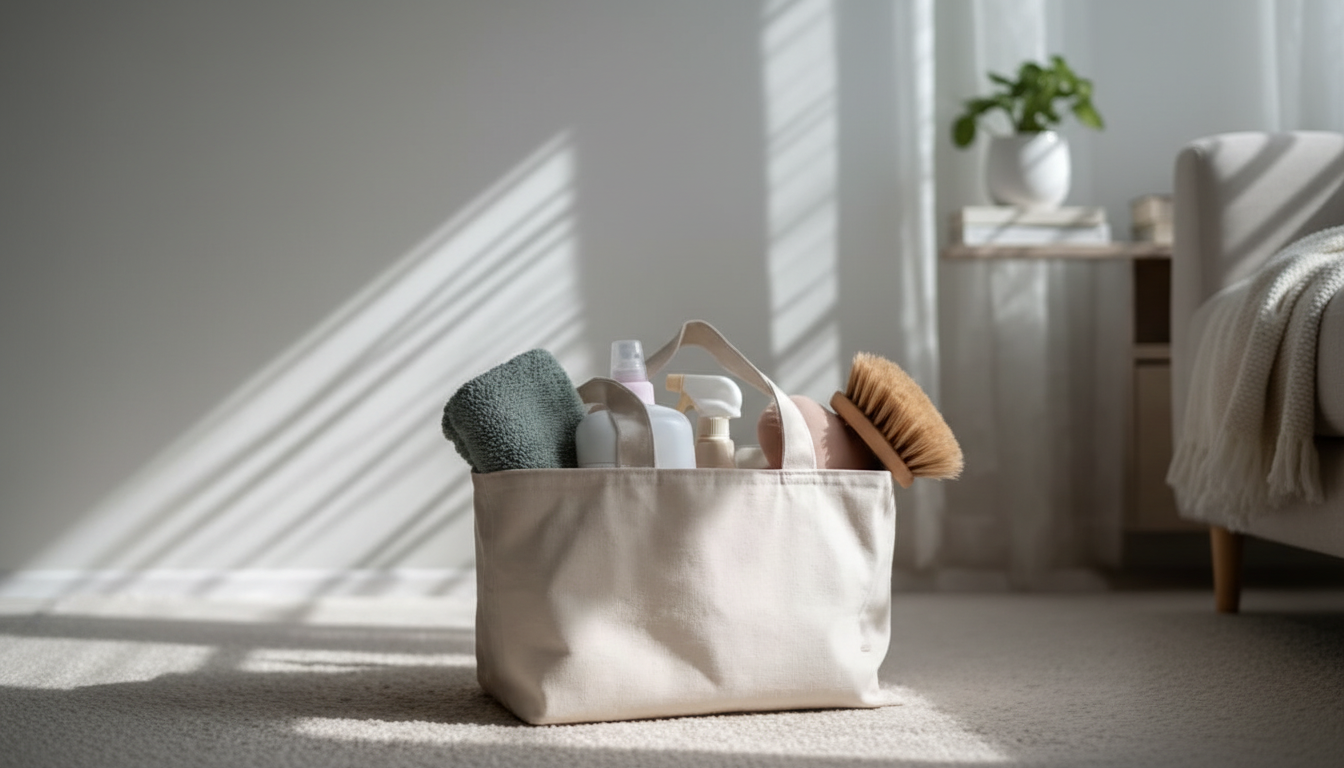
- Collect and return: Carry a small basket and do one pass to gather items that don’t belong (mail, cups, toys, chargers). Then put them away—don’t just relocate the basket.
- Clear and wipe main surfaces: Hit kitchen counters, the dining table, and the bathroom sink. A microfiber cloth makes this fast and streak-free.
- Quick kitchen close: Load/empty the dishwasher, wash a small batch of dishes, wipe the sink, and take out trash if it’s smelly or full. Kitchens “broadcast” mess quickly, so this step has outsized impact.
- Bathroom mini-reset: Swap the hand towel if needed, wipe faucet spots, and do a quick toilet swish on heavy-use days. For disinfecting guidance in shared spaces, the CDC’s cleaning and disinfecting recommendations are a helpful reference.
- Floor touch-up: Spend 2–5 minutes spot vacuuming or sweeping your highest-traffic path (entry, kitchen, around the table). Less grit on the floor also supports indoor air quality over time; see the National Institute of Environmental Health Sciences overview on housecleaning and indoor air.
- End with a “tomorrow favor”: Set out one item that reduces morning friction—coffee setup, work bag by the door, or kids’ backpacks packed and ready.
The difference between tidying, cleaning, and organizing
How common home tasks fit into a daily routine
| Task |
Category |
Typical frequency |
Why it matters |
| Put items back in their place |
Tidying |
Daily |
Prevents clutter buildup and reduces visual noise |
| Wipe kitchen counters |
Cleaning |
Daily |
Keeps food-prep areas sanitary and discourages pests |
| Paper/mail sort into three piles (act/file/recycle) |
Tidying + Organizing |
Daily or 3x/week |
Stops paper clutter from spreading to every surface |
| Disinfect high-touch points (handles, switches) |
Cleaning |
Weekly or as needed |
Reduces germ transfer in shared spaces |
| Declutter one drawer or shelf |
Organizing |
Monthly or seasonal |
Maintains systems so daily tidying stays quick |
Printable checklist approach: make the routine effortless
If you want a ready-made option, Daily Tidy Routine: Small Steps, Big Difference (Printable Home Cleaning Checklist) is designed for quick checkboxes and a minimalist-style house reset.
Daily tidy up routine tips that actually stick
If mental overload is the biggest barrier (especially when the house feels noisy and choices feel endless), a simple clarity framework can help you reset your head before you reset the room. Making Sense of Your Overthinking – A Mind Clarity Guide pairs well with routines that rely on small, repeatable decisions.
Room-by-room micro-routines (pick what fits your home)
A simple weekly rhythm that supports the daily reset
Also batch errands that create clutter—returns, recycling drop-off, donations—into a single weekly slot. When items leave the house on a schedule, surfaces stay clear with far less effort. If you’re using disinfectants, the EPA’s List N can help you understand products intended for specific pathogens.
Common roadblocks and quick fixes
When a printable checklist is the right fit
For minimalist house resets, the goal is consistent calm rather than occasional big cleans—exactly what a small daily checklist supports. If you’d like a ready-to-use layout, Daily Tidy Routine: Small Steps, Big Difference is a quick-print option that keeps the routine clear and repeatable.
FAQ
How long should a daily tidy routine take?
Most daily tidy routines take about 10–20 minutes. On low-energy days, a 3-step minimum (clear counters, get dishes to the sink/dishwasher, and do a quick floor pickup) keeps the home functional, while a longer reset can happen on catch-up days.
What’s the difference between a daily tidy and a daily cleaning routine?
Tidying is returning items to their homes and clearing surfaces so the space feels orderly. Cleaning is wiping, washing, and sanitizing to remove dirt and germs; many households blend a small amount of cleaning into the daily tidy for kitchens and bathrooms.
How can a daily tidy routine work with kids or roommates?
Use a short timed reset (5–10 minutes), give each person a simple role, and keep “homes” obvious with baskets or labeled zones. A shared checklist posted in a common area reduces confusion and makes expectations clear without constant reminders.
Recommended for you












Leave a comment