The Art of Arranging Furniture for Effortless Living
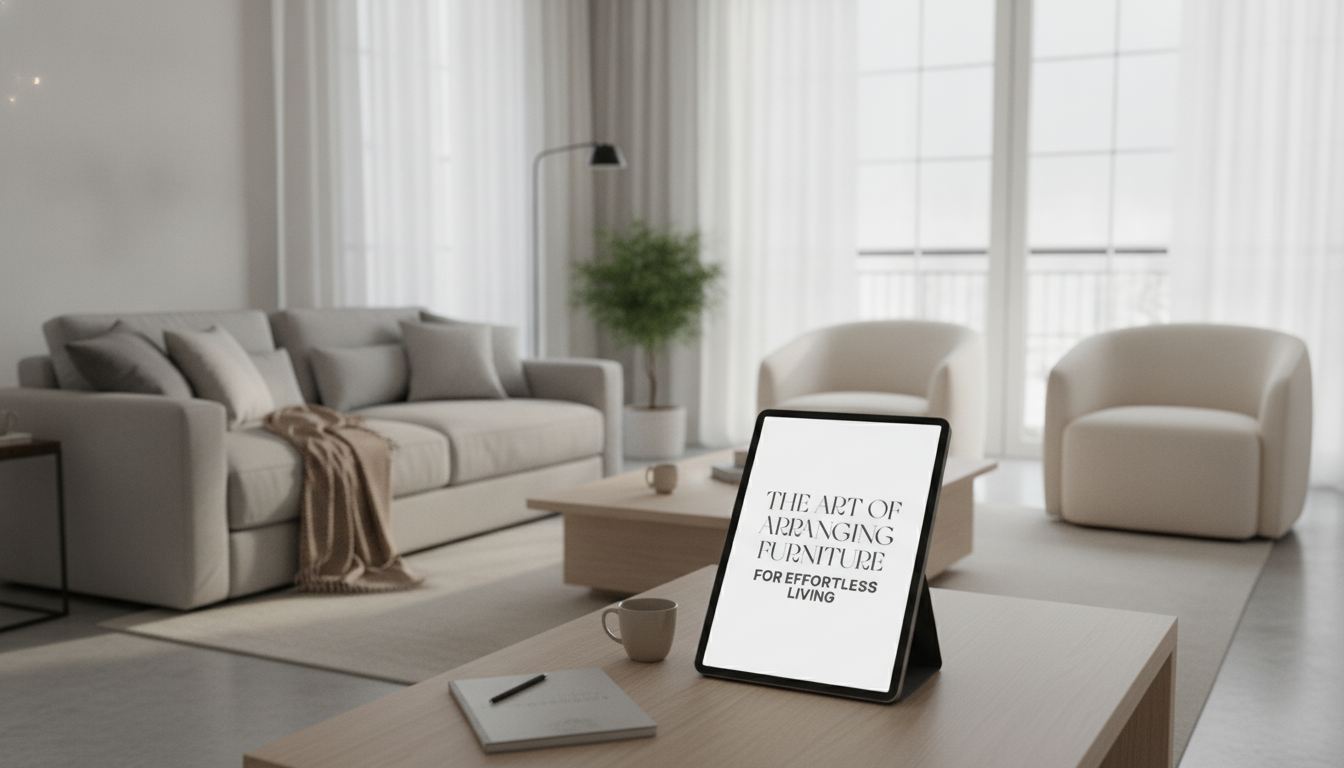
A well-arranged room feels easy to move through, easy to use, and easy to live in. The difference usually comes down to clear pathways, intentional zones, and furniture scaled to the space. The steps below focus on what makes a home feel naturally functional—so you’re not constantly stepping around obstacles, shifting chairs, or wondering why a “pretty” room still feels tense. For room-by-room layout support, the digital download The Art of Arranging Furniture for Effortless Living (digital download) is built to keep the process simple while you measure, edit, and rearrange.
What “flow” means in a home
Flow is the relationship between movement paths (how people walk), activity zones (how people use the room), and visual calm (what feels balanced at a glance). When those three work together, the room feels “obvious” to live in: you can enter, sit, set something down, or pass through without micro-adjustments.
Good flow reduces bottlenecks near doorways, seating, and high-traffic routes. A room can be stylish but still feel stressful if circulation paths cut through seating areas or force constant sidestepping. The goal isn’t symmetry—it’s comfort, access, and function that matches daily habits (including how you actually enter the room, where you drop your bag, and where people naturally gather).
Start with the room’s “fixed points”
Before you drag furniture around, map what can’t move (or shouldn’t): doors, windows, radiators, built-ins, outlets, TV/data connections, and main light sources. These fixed points quietly control your best layout options.
- Mark swing paths of doors and drawers so furniture never blocks full access.
- Identify the primary focal point (often a fireplace, a large window, or the TV) and decide whether seating should align to it or lean more toward conversation.
- Measure the room and major pieces before moving anything; a few inches can determine whether circulation works.
If you want professional perspectives on space planning standards and interior best practices, sources like American Society of Interior Designers (ASID) and editorial room examples from Architectural Digest can be helpful reference points.
Define pathways first, then build zones
Layout decisions get easier when you treat the main walkway as non-negotiable. Establish the primary route from the entry to the room’s key destinations (seating, hallway, kitchen, balcony, etc.) and keep it as straight and wide as possible. Then layer in zones based on use: conversation, reading, media, work-from-home, play, or dining.
- Avoid running a main pathway directly through the middle of a seating group; route it around the perimeter when possible.
- Use rugs and lighting to “anchor” zones so the room feels organized rather than floating.
- If the room pulls double duty (like living room + office), let the walkway separate functions instead of slicing through them.
Quick spacing guide for comfortable movement
| Area |
Recommended clearance |
Why it helps |
| Main walkway (high traffic) |
30–36 in (76–91 cm) |
Reduces shoulder brushing and constant detours |
| Secondary path (lower traffic) |
24–30 in (61–76 cm) |
Comfortable access without wasting space |
| Between sofa and coffee table |
14–18 in (36–46 cm) |
Easy reach while allowing leg room |
| From seating to side table |
0–6 in (0–15 cm) |
Keeps drinks/books within easy reach |
| Dining chair pull-back space |
36 in (91 cm) behind chairs |
Allows sitting down and standing up without squeezing |
| TV viewing distance |
Varies by screen size |
Improves comfort and reduces eye strain |
Arrange seating for conversation and comfort
Seating is where flow becomes “felt.” Aim for a conversation distance where voices carry naturally—typically close enough that people don’t have to raise their voices, but not so close that the room feels crowded. L- and U-shaped groupings usually feel more relaxed than a rigid face-forward lineup.
- Keep at least one “easy seat” closest to the entry of the room; it makes the space feel welcoming and navigable.
- Anchor the main seating group with a rug sized so at least the front legs of key pieces sit on it (or all legs if the room allows).
- If the TV is the focal point, avoid forcing every seat into a single straight row; include one angled chair or a flexible ottoman to soften the layout.
Scale, proportion, and “visual breathing room”
Common layout problems and quick fixes
A room-by-room method that stays consistent
Digital guide for layouts that feel effortless
If you want a structured way to plan layouts without second-guessing every move, The Art of Arranging Furniture for Effortless Living | Home Design eBook | Interior Flow Guide | Digital Download walks through circulation, zones, and decision-making so rooms feel open, functional, and calm—especially useful for renters and homeowners who want better daily usability without renovating.
For the mental side of resetting a space—when “where do I start?” turns into a spiral—Making Sense of Your Overthinking – A Mind Clarity Guide (Digital Download) can help you move from stuck to clear, so the rearrange-and-edit process feels lighter.
FAQ
What is the best way to arrange furniture for better flow?
Start by defining the main walkway from the entry to the room’s key destinations and keep it clear. Then build activity zones around it, using a rug and a primary furniture piece (like a sofa or dining table) as the anchor.
How much space should be left for walking paths in a room?
Aim for about 30–36 inches for main walkways and 24–30 inches for secondary paths. Adjust slightly based on room size and how often the path is used, but keep the most-used route as open as possible.
Should furniture be placed against the walls to make a room feel bigger?
Not always. Pulling key pieces slightly inward can improve conversation distance, define zones, and create a clearer circulation path, which often makes the room feel more intentional and spacious.
Recommended for you








Leave a comment