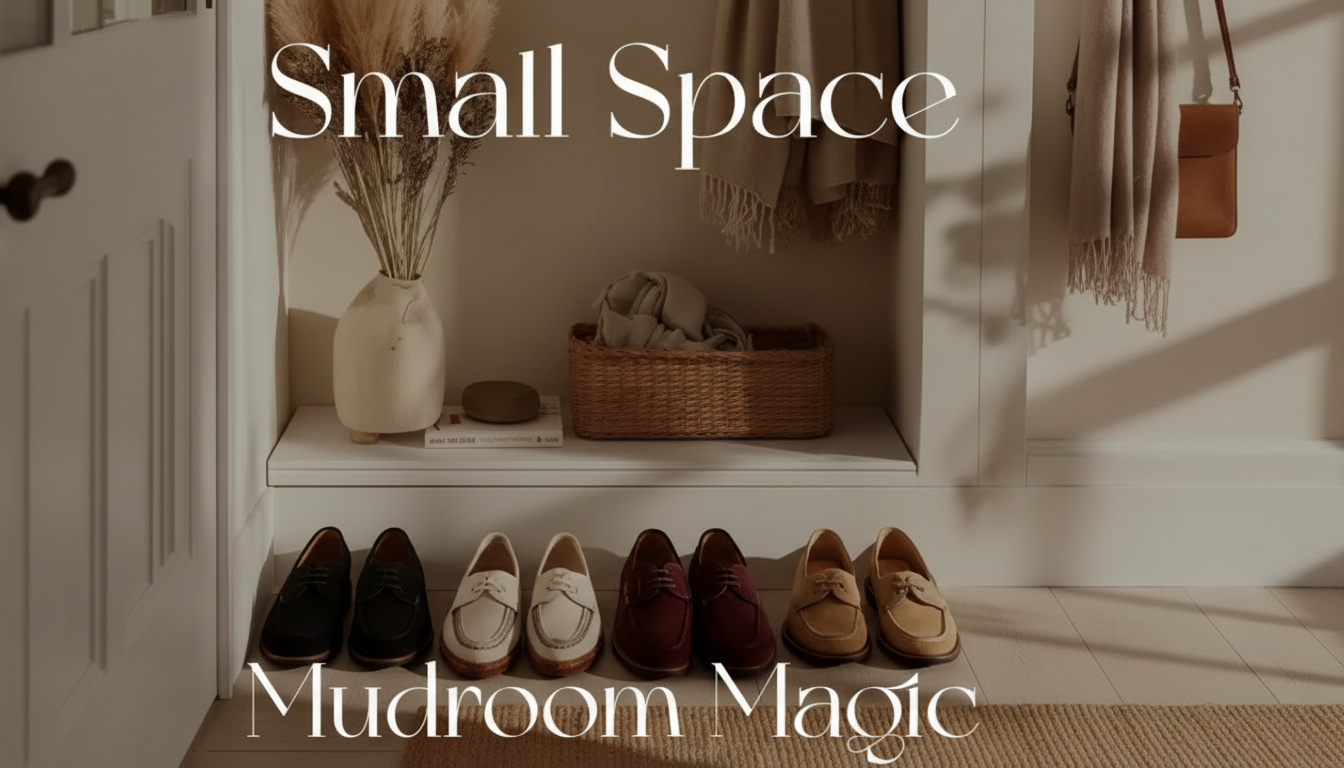
Small Space Mudroom Magic: A Simple Checklist to Turn Any Entryway into an Organized Drop Zone
A functional mudroom doesn’t require a dedicated room—just a clear plan for what needs to land, hang, store, and leave the house smoothly. This small-space approach works in apartments, narrow hallways, and front-door corners by focusing on a few high-impact pieces and a quick checklist routine that keeps clutter from creeping back.
What a “micro-mudroom” needs to do (even in a tight entryway)
A micro-mudroom is less about furniture and more about consistency. When your entryway supports the same actions every time you come and go, it stops becoming a dumping ground.
- Create a reliable landing spot for daily essentials: keys, phone, wallet, badge, sunglasses, dog leash.
- Handle outerwear without pile-ups: coats, rain jackets, hats, gloves, scarves.
- Contain shoes and wet gear: sneakers, boots, umbrellas, backpacks, sports bags.
- Build an easy exit routine: items to grab on the way out, quick checks before leaving.
- Stay maintainable: resets that take under 2 minutes.
If you also want a cleaner “outside stays outside” boundary, entryway habits like removing shoes can reduce what’s tracked in. For broader context on indoor contaminants and dust, see the EPA’s indoor air quality guidance.
Measure first: the small-space layout that prevents backtracking
Before buying hooks or bins, measure the smallest slice of space that can still support your routine. Many homes can spare a 24–36 inch wide section of wall, a corner, or even the side of a cabinet near the door.
- Identify the “drop zone footprint”: a 24–36 inch wide slice is often enough.
- Map vertical space in three bands: floor zone (shoes), hand zone (hooks/bins), eye zone (mail/keys).
- Check door swing and traffic path: keep storage within reach without narrowing the walkway.
- Choose one primary surface: a slim shelf, tray, or wall organizer prevents counter creep.
- Plan for seasonal overflow: a top shelf or lidded bin prevents constant swapping.
Micro-mudroom zones and what belongs in each
| Zone |
Best for |
Space-saving ideas |
Keep-out rule |
| Floor zone |
Shoes, boots, umbrellas |
Slim shoe rack, boot tray, vertical umbrella stand |
No loose piles—everything needs a defined spot |
| Hand zone |
Coats, bags, dog gear |
Staggered hooks, over-the-door rack, wall rail with S-hooks |
Avoid overloading hooks; limit to daily-use items |
| Eye zone |
Keys, mail, sunglasses, charging |
Key hooks + small shelf, wall pocket, charging dock |
No paper stacks—sort immediately into “act” or “recycle” |
| Top/hidden zone |
Seasonal accessories, backups |
Labeled bins, basket shelf, cabinet top with lidded containers |
Don’t store daily essentials here |
The setup sequence: build the system in 30–60 minutes
The fastest way to get a small-space mudroom right is to build it in order. Skipping ahead (like buying bins before deciding what belongs there) usually creates more clutter, not less.
- Step 1: Clear and reset the entry area—remove anything that doesn’t support arriving or leaving.
- Step 2: Assign homes before buying organizers—decide what lives on hooks, what goes in bins, and what stays in a closet.
- Step 3: Install the “must-have trio”: hooks (hang), tray/shelf (drop), bin/rack (contain).
- Step 4: Add one friction-reducer: boot tray for wet days, a small mirror, or a lint roller station.
- Step 5: Label only what’s helpful—especially shared bins for kids, pets, or grab-and-go items.
To keep decisions simple, a printable plan helps you choose what belongs at the door and what should live elsewhere. The Small Space Mudroom Magic printable checklist and home guide (digital download) is designed for quick setup and seasonal refreshes.
Declutter rules that keep the entryway from relapsing
Entryways relapse when there’s no hard limit—more hooks, more shoes, more paper. The fix is a few simple constraints that make “resetting” almost automatic.
If your entry routine includes coming home from public places, a quick “keys down, hands washed” pattern can make the flow feel cleaner and more complete. The CDC handwashing guidance is a helpful reference for building simple everyday hygiene habits.
Family-friendly tweaks: kids, roommates, and busy schedules
For households that track in dirt and debris, a shoes-off habit plus a defined shoe zone can help reduce what ends up on floors. For additional context on shoes and contaminants at the entry, InterNACHI’s Healthy Homes guidance offers practical considerations.
Printable checklist: the fastest way to plan and keep it consistent
If mornings tend to spiral when you’re juggling a lot, pairing an organized drop zone with a simple mental “reset” can make leaving feel calmer. The Making Sense of Your Overthinking – A Mind Clarity Guide (digital download) is a helpful companion for creating steadier routines when your brain wants to run ahead of the day.
FAQ
What is the smallest space that can work for a mudroom setup?
A narrow wall section or corner near the door can work if it includes hooks (hang), a small surface (drop), and a defined container for shoes and bags (contain). Prioritize vertical storage and keep the walking path clear.
How do you keep shoes from taking over the entryway?
Set a firm capacity using a rack or tray, then store off-season or rarely worn pairs elsewhere. A simple rule helps: only the current rotation stays in the entry, and everything else has a different home.
What’s the best order to set up an entryway organization system?
Clear the area first, assign homes for categories next, then install the core pieces (hooks, a drop surface, and a container). Add one convenience feature like a boot tray, and finish with a small daily/weekly reset routine.
Recommended for you











Leave a comment