Mindful Moments: small practices that change the whole day
A calmer mind rarely comes from one big breakthrough—it’s built through small, repeatable moments of attention. Mindfulness exercises can help reduce stress, soften overthinking, and make daily routines feel more grounded. The goal isn’t perfection; it’s building a reliable way to return to yourself, even when life is loud.
These practices are designed to fit into real schedules: before a meeting, while dinner cooks, in the car before you go inside, or in bed when your brain won’t power down. For a deeper look at effectiveness and safety, see the National Center for Complementary and Integrative Health and the American Psychological Association.
What “Mindful Moments” Means in Daily Life
Mindfulness is skill-building: noticing thoughts, body sensations, and emotions without getting pulled around by them. It’s less about “being calm all the time” and more about recognizing what’s happening sooner—then choosing a steadier response.
- Why small practices work: short reps create consistency, which often matters more than long sessions done rarely.
- What mindfulness is not: forcing your mind to be blank, judging distractions, or treating breathwork like a test you can fail.
- Signs your practice is helping: quicker recovery from stress, fewer spirals, more patience, and smoother transitions into sleep.
Think of each mindful moment as a “reset point.” It doesn’t erase problems; it reduces the emotional static that makes everything feel harder.
A Quick Start Routine (3 Minutes, Anywhere)
Use this as a default routine when you don’t want to decide what to do. It’s short enough to repeat multiple times a day—especially before reactive moments (sending a tense message, jumping into a meeting, or doom-scrolling).
- Arrive (20 seconds): feel both feet, name the place (“kitchen,” “car,” “desk”), soften the jaw and shoulders.
- Breathe (60 seconds): inhale naturally, exhale slightly longer; count four out-breaths only.
- Body check (60 seconds): scan forehead, throat, chest, belly; label sensations as “tight,” “warm,” “tingly,” “neutral.”
- Choose one next action (40 seconds): pick one doable step (send the email, drink water, start the timer).
- Close (10 seconds): one deliberate exhale and a gentle shift back to activity.
If your mind wanders, that’s not a problem—it’s the moment you practice returning.
Simple Exercises for Calm, Focus, and Emotional Balance
Box breathing (2–4 minutes)
Inhale 4, hold 4, exhale 4, hold 4. If you feel lightheaded, reduce the count or return to natural breathing. This is a steadying tool when stress feels “high volume.”
5-4-3-2-1 grounding (2–3 minutes)
Identify 5 things you see, 4 you feel, 3 you hear, 2 you smell, 1 you taste. It’s ideal for anxious spikes because it pulls attention back into concrete sensory details.
Labeling thoughts (1–2 minutes)
Silently name mental events: “planning,” “remembering,” “worrying,” “judging.” Then return to the breath. This interrupts rumination without requiring you to “solve” every thought.
RAIN for difficult emotions (4–8 minutes)
Recognize, Allow, Investigate (where it shows up in the body), Nurture (offer a kinder phrase). For a clear explanation of RAIN, see Mindful.org’s guide.
Single-tasking reset (90 seconds)
Pick one small task. Notice urges to switch tabs, check your phone, or “just do one more thing.” Each time you return, you train attention without strain.
Micro-compassion break (1 minute)
Place a hand on your chest. Acknowledge: “this is hard.” Then add: “may I be kind to myself in this moment.” It’s simple, private, and surprisingly effective when self-criticism kicks in.
Choose an Exercise by Situation
| Situation |
Exercise |
Time |
What to focus on |
| Racing thoughts at night |
Labeling thoughts + long exhale |
2–5 min |
Name the thought category, then feel the out-breath |
| Anxiety surge in public |
5-4-3-2-1 grounding |
2–3 min |
Concrete sensory details |
| Irritability and stress |
RAIN |
4–8 min |
Locate the emotion in the body and soften around it |
| Low focus while working |
Single-tasking reset |
1–2 min |
One task + noticing the urge to switch |
| Tension in the body |
Body scan |
3–7 min |
Areas of tightness without forcing release |
Building a Practice That Actually Sticks
- Anchor mindfulness to existing habits: after brushing teeth, while the kettle boils, before unlocking your phone.
- Use a minimum baseline: “one mindful breath” counts; consistency beats intensity.
- Plan for distractions: wandering is normal—returning is the practice.
- Match technique to energy level: calming practices for high stress; sensory grounding for overwhelm; brief focus drills for mental fog.
- Track one meaningful metric: time to calm down after stress, number of spirals per day, or ease of falling asleep.
Common Pitfalls and Gentle Fixes
A Structured Guide for Daily Practice (Digital Download)
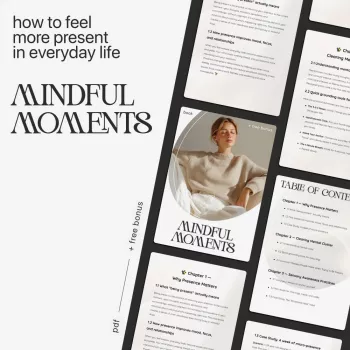
If you want step-by-step structure without overcomplicating things, Mindful Moments: Simple Exercises to Calm Your Mind and Transform Your Life (digital download) offers a collection of short, repeatable sessions you can rotate through all week.
Pairing Mindfulness with Clarity When Overthinking Shows Up
For extra structure, Making Sense of Your Overthinking (digital download) pairs well with mindful moments when you want both calm and clear direction.
FAQ
How long should mindfulness exercises be to feel calmer?
Even 1–5 minutes can help regulate stress in the moment, especially when you repeat it consistently. Start with a simple 3-minute routine and expand gradually as it becomes easier to return to it.
What if mindfulness makes anxiety worse at first?
Increased awareness can feel intense initially, so try practicing with eyes open, shortening the session, or using sensory grounding like 5-4-3-2-1. If you feel overwhelmed or trauma symptoms appear, pause the practice and seek professional support.
Can mindfulness help with overthinking and rumination?
Yes—labeling thoughts and returning attention interrupts the loop and reduces the urge to chase every idea to the end. Pair the practice with one small next action to turn mental noise into something workable.
Recommended for you













Leave a comment