Making Organization Stick: Simple Systems, Small Resets, and a Plan That Holds Up
A burst of motivation can make any space look organized for a day. What actually lasts is a set of small, repeatable systems that match real life: busy mornings, tired evenings, shared spaces, and digital clutter that quietly rebuilds. Use the steps below to identify why organization keeps slipping, reset the essentials, and maintain order with quick routines that don’t require constant willpower.
Why organization doesn’t stick (and what it usually means)
When a system keeps “failing,” it’s rarely a personal flaw. Most of the time, the setup is asking too much of real-life energy and attention.
- Too much kept: Storage gets treated as a solution, but the real issue is volume. If every shelf is full, nothing can be put away quickly.
- Homes without “homes”: Items float between surfaces because there’s no single default spot. When the “home” changes day to day, clutter becomes the default.
- Systems are too complicated: If putting something away takes more than a few seconds, it won’t happen consistently—especially in high-traffic areas.
- No reset rhythm: Even good systems drift without quick weekly and seasonal check-ins to pull things back into place.
- Mismatch with household habits: A system that works for one person may fail in shared spaces unless it’s easy for everyone (including kids and guests).
Organization is less about perfection and more about reducing friction. The goal is to make “put away” as easy as “set down.”
Build a lasting system: fewer steps, fewer items, clearer homes
Instead of organizing everything at once, build a system around what actually trips you up. That usually means designing for your most common piles—not your ideal routine.
- Start with “friction”: Notice what piles up (mail, shoes, chargers, laundry) and design the system around those pain points.
- Choose one container per category: The container sets the limit; when it’s full, something must go.
- Make the first step effortless: Open bins, hooks, and drop zones beat lidded boxes for everyday items.
- Keep like with like: Categories should be obvious to anyone (examples: “batteries,” “school papers,” “pet supplies”).
- Label for behavior, not aesthetics: Labels should match what people actually call the item.
Common “Doesn’t Stick” Problems and Fixes That Last
| What keeps happening |
Likely cause |
System tweak to try |
| The kitchen counter fills up daily |
No defined landing zone for daily-use items |
Create a small tray or bin for 5–7 daily essentials; relocate everything else |
| Closet gets messy after laundry day |
Too many categories and decisions |
Reduce hang types; use 3 bins: donate, repair, relocate; simplify folding |
| Kids’ items spread through the house |
No quick return path |
Add a daily “return basket” per child and a 5-minute evening reset |
| Paper piles reappear |
Unclear processing routine |
Set a 2-minute rule: toss/junk, file, act; keep a single inbox tray |
| Phone/computer feels cluttered again |
Downloads and photos have no lifecycle |
Add a weekly digital reset: clear downloads, archive screenshots, delete duplicates |
If you want a ready-to-use plan you can print (or keep on your phone) so the system doesn’t live in your head, use Printable home organization checklist and digital decluttering guide for lasting systems to set up your “homes,” reset zones, and maintenance routine.
The 30-minute reset: the minimum effective routine
When life gets busy, you need a routine that still works when energy is low. This reset keeps your space safe, functional, and easy to recover—without aiming for showroom perfect.
- 10 minutes: Gather “floaters” (items that live on surfaces) into a basket; return them to their homes.
- 10 minutes: Clear one hotspot (entryway, coffee table, kitchen counter) and reset it to “ready state.”
- 5 minutes: Quick trash/recycling sweep in main living areas.
- 5 minutes: Prep tomorrow (keys/bag/chargers; set out one high-friction item like lunch containers).
- If time runs out: Stop at “safe and functional,” not perfect.
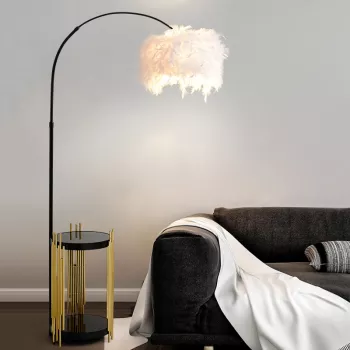
For a cozy corner that signals “wind down and reset,” consider adding a statement light like the Nordic Feather Floor Lamp near your entryway drop zone, desk, or reading chair to make the space feel intentionally finished.
Decluttering without backsliding: keep, relocate, donate, discard
Cleaning and disinfecting can be part of the reset, but it works best when surfaces are clear first; the CDC’s guidance supports focusing on routine cleaning practices that fit the situation and the space (CDC – How to Clean and Disinfect Your Home).
Digital decluttering that stays done
As you streamline, don’t skip protection: good organization includes resilience. A simple backup approach helps prevent losing the files you worked hard to sort (NIST – Backups and Data Protection).
Make it easy for future-you: maintenance rules that don’t rely on motivation
Reducing clutter can also reduce stress load by cutting the number of daily micro-decisions and visual distractions. Chronic stress affects the body in measurable ways, so simplifying your environment is more than aesthetic (American Psychological Association – Stress effects on the body).
A simple checklist to turn the plan into a repeatable system
FAQ
What should be organized first when everything feels overwhelming?
Start with a high-impact zone that affects daily flow: the entryway, kitchen counter, or bedroom floor. Define the “ready state,” remove obvious trash, then give the most-used items a single home.
How long does it take for an organization system to feel natural?
Most systems start to feel easier after a few weeks of consistent resets. The biggest accelerators are fewer steps (open storage, fewer categories) and a short weekly maintenance routine.
How can organization work in a house where not everyone follows the system?
Make the system frictionless: fewer rules, clear labels, and easy drop zones. Use shared “return baskets” and focus on keeping common areas functional even if personal spaces vary.
Recommended for you









Leave a comment