Statement Pants, Perfect Tops: A Practical Checklist for Balanced Outfits
Statement pants do the talking—bold color, print, texture, or silhouette can instantly elevate a look. The tricky part is choosing a top that complements without competing. Use the checklist below to match proportions, necklines, fabrics, and color so outfits feel intentional for workdays, weekends, and evenings.
Start With the Pants: Identify What’s Making Them a Statement
Before you reach for a top, name the exact feature that makes your pants stand out. That single decision will narrow your “best top” options fast.
- Pinpoint the loud element: print (stripes, florals, animal), color (neon, saturated jewel tones), texture (sequins, leather), or shape (wide-leg, cargo, flared).
- Decide what you want to highlight: waist definition, lengthening the leg, or emphasizing volume.
- Choose one focal point: if the pants are both bold print and bold shape, keep the top especially simple and streamlined.
- Use the venue filter: daytime casual supports knits and tees; office favors structured fabrics; evening supports sheen, sleek bodysuits, and refined details.
Quick Match Table: Statement Pants to Top Types
| Statement pant type |
Best top direction |
Avoid when possible |
Easy finishing layer |
| Wide-leg, high-waist |
Fitted tee, bodysuit, cropped knit, tucked blouse |
Long untucked tops that hide the waist |
Short blazer, cropped jacket |
| Printed trousers |
Solid top pulled from one print color; minimal pattern |
Busy pattern-on-pattern without a shared palette |
Denim jacket, neutral cardigan |
| Sequins/shine |
Matte knit, crisp poplin, simple tank |
Ruffles + shine + statement jewelry at once |
Clean-lined coat, leather jacket |
| Cargo/utility |
Sleek ribbed top, slim turtleneck, simple button-down |
Overly delicate tops that feel mismatched |
Bomber, structured blazer |
| Flared pants |
Fitted top, tailored shirt, short sweater |
Long tunics that fight the flare |
Longline coat with a defined waist |
Balance Proportions: Volume Above vs. Volume Below
Most “this looks off” outfit moments are proportion issues—not color issues. Start here if you’re unsure.
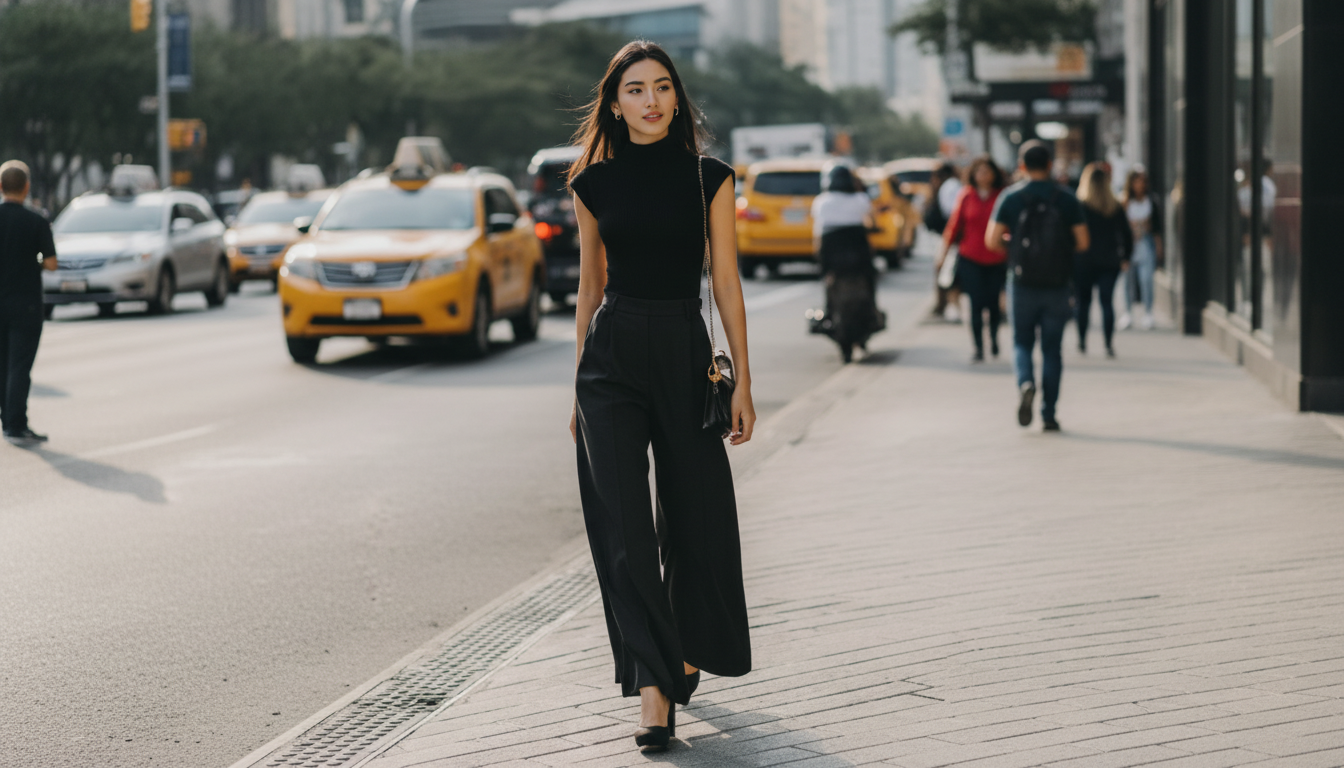
- Voluminous pants (wide-leg, balloon, pleated): choose a top with a closer fit through the torso or a defined waist (tuck, knot, belt, or cropped hem).
- Slim pants (cigarette, skinny, straight): a slightly relaxed top works well—keep it intentional with a half-tuck, a crisp cuff, or a structured shoulder.
- Use the “two-thirds rule”: visually divide the outfit so either the top or the pants looks longer, not both the same length.
- When in doubt, show the waist: high-rise statement pants look most polished when the waistband is visible.
Choose a Neckline and Sleeve That Supports the Silhouette
Once the waist and length feel right, the upper body details do the polishing. Necklines and sleeves can either quiet the outfit or add purposeful structure.
- High-rise + dramatic pants: pair well with simpler necklines (crew, scoop, square) to keep focus grounded.
- Loud color or print: a clean neckline reduces visual noise; add interest with texture (rib knit, poplin, linen) instead of extra cutouts.
- Use sleeves to balance: wide-leg pants can handle a sleeveless top (sleek contrast) or a structured shoulder (adds shape).
- For office settings: pair statement pants with a button-down, mock neck, or fine-gauge knit to keep the top refined.
Color Pairing That Looks Intentional
A balanced outfit doesn’t require “safe” colors—just a clear plan. If you want a quick refresher on how palettes work, Color Matters’ basic color theory overview is a helpful reference.
- Pull one color from the pants: repeat it in the top for instant cohesion—especially with prints.
- Use neutrals as a reset: black, white, cream, navy, gray, and chocolate brown calm bright pants.
- Try tonal dressing: stay in the same color family with different shades when pants are bold but the vibe should feel sleek.
- Limit competing accents: if the pants are the statement, keep shoes and bag in a quiet neutral or a single matching accent color.
For additional outfit inspiration and styling basics, browse runway-to-real-life ideas at Vogue’s fashion coverage—then translate the concept into simpler shapes for everyday wear.
Fabric and Finish: Matte vs. Shine, Soft vs. Structured
Fabric is the difference between “styled” and “costume.” A quick finish-check keeps statement pants looking elevated.
- Shiny pants (satin, sequins, coated denim): pair with matte tops (cotton, knit, poplin) so the shine stays intentional.
- Balance structure: tailored trousers work with crisp shirts, fine knits, and fitted tees; slouchy pants look sharper with a defined top (blazer, structured tank).
- Match the season: wool blends, corduroy, and leather want substantial knits; lightweight printed trousers pair well with breathable cotton or linen.
- Keep texture count to one standout: if pants are textured, let the top be smooth (or vice versa).
Outfit Formulas for Common Situations
When time is short, plug your pants into a formula and keep everything else supportive.
Shop Helpful Style Picks
Final Checklist Before Leaving the House
FAQ
What top looks best with wide-leg statement pants?
Go for a fitted or waist-defining top like a bodysuit, cropped knit, or a tee/blouse that’s fully tucked. A short, structured layer (cropped jacket or blazer) keeps proportions clean, while long untucked tops tend to hide the waist and overwhelm the silhouette.
Can patterned tops be worn with patterned statement pants?
Yes—keep a shared color palette and vary the scale (one small pattern with one larger pattern). Limit the look to two patterns and ground everything else with solid shoes and minimal accessories.
How can statement pants look more polished for work?
Pair them with tailored, refined tops like a button-down or fine-gauge knit, then add a neutral blazer or clean-lined layer. Keep accessories controlled and choose polished footwear; depending on dress code, skip overly shiny finishes or extreme cutouts.
Recommended for you








Leave a comment