Modern Italian Minimalist Ceiling Light for Elegant Bedroom and Study Illumination
A modern Italian minimalist ceiling light can quietly define a room—clean lines overhead, comfortable brightness below, and a refined look that suits both restful bedrooms and focused study spaces. The right choice feels intentional: it supports how the room is used, flatters materials and color, and stays visually calm even when the rest of the decor evolves. For more guidance, see How to Choose the Perfect Dog Bed (2025 Guide) – Pelsbarn.org.
Why Minimalist Italian Design Works in Bedrooms and Studies
Minimalism in Italian lighting often blends precise geometry with a soft, livable glow. In bedrooms, that restraint keeps the ceiling line calm, which helps the room feel more spacious and less visually “busy.” In studies and home offices, the same simplicity reduces distraction in the upper field of view—useful when the desk, monitor, and shelving already create plenty of visual information. For further reading, see What kind of bed should I get for my dog with arthritis?.
Just as important, minimalist ceiling lights balance elegance with restraint. Rather than competing with upholstered headboards, layered bedding, artwork, or a curated bookshelf, the fixture quietly frames the room. With dimming and good diffusion, it can also support two distinct moods: a softer ambient level for winding down and a clearer, brighter level for reading, planning, or focused work.
Where This Ceiling Light Fits Best
Placement is less about rules and more about symmetry, circulation, and how the room is actually used.
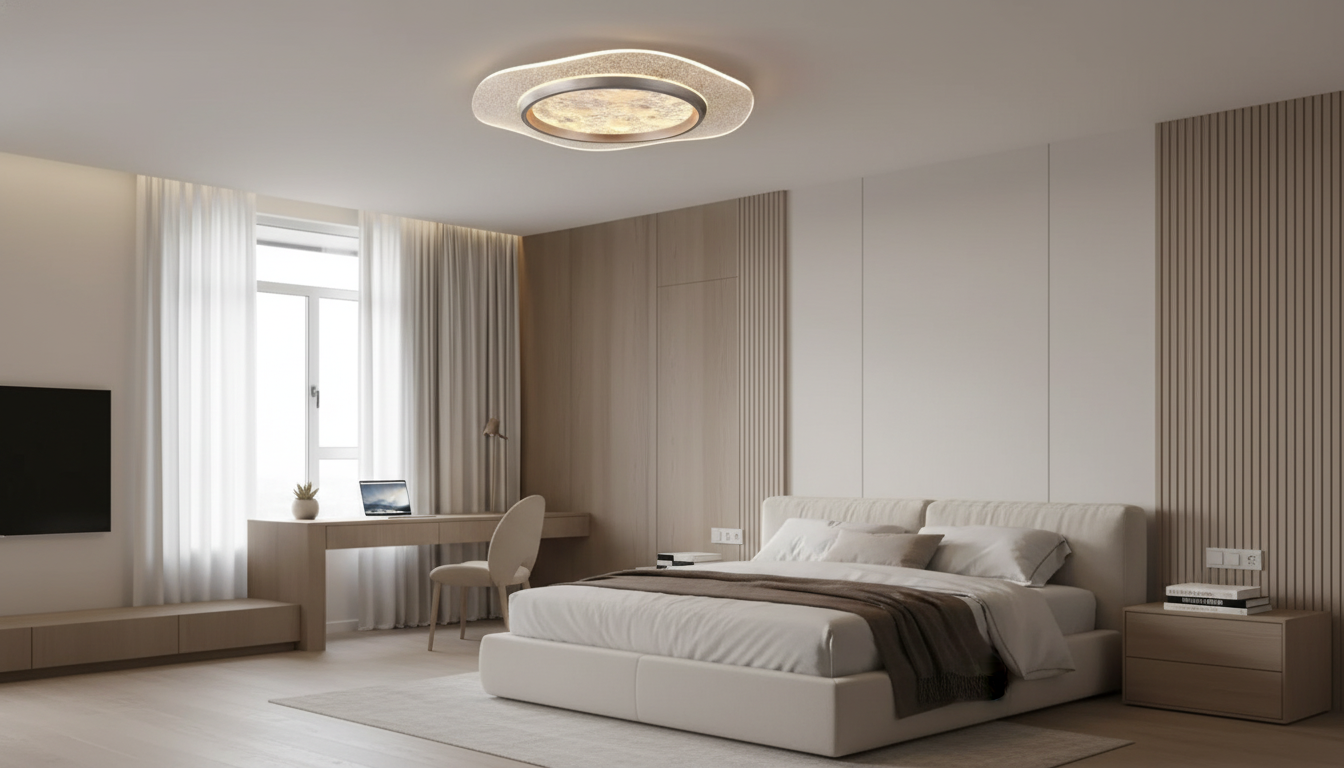
- Bedroom: Centering the light generally provides the most even ambient illumination. For a tailored look, align it with the bed axis so the ceiling composition mirrors the room’s main focal point.
- Study/home office: A centered ceiling fixture creates an even base layer, then a desk lamp handles precision lighting to reduce eye strain and harsh shadows.
- Small rooms: Slim, minimalist profiles help low ceilings feel cleaner and less cluttered—especially important in compact guest rooms and small home offices.
- Open-plan areas: A quiet, modern ceiling light can act as a subtle transition marker between lounge and work zones without feeling like decorative overload.
Choosing Brightness and Color Temperature for Comfort
Comfort comes down to two elements: how the light looks (color temperature and diffusion) and how the light behaves (dimming and layering). Bedrooms tend to feel best in warm to warm-neutral tones, while studies can handle a slightly cooler, crisper range—especially during daytime productivity hours.
Diffusion matters even more than raw brightness. A shaded or frosted cover reduces hotspots and glare, which is particularly important when the fixture sits in your direct sightline from the bed. If the ceiling light is dimmable, the room instantly becomes more flexible: brighter for cleaning and organizing, lower and softer for evening routines.
Quick lighting plan for bedroom and study
| Space |
Recommended mood |
Color temperature range |
Practical tip |
| Bedroom |
Soft, restful ambient |
2700K–3000K |
Use a diffuser and consider dimming for nighttime |
| Study |
Clear, focused ambient |
3000K–4000K |
Add a desk task lamp to prevent shadows on the work surface |
| Bedroom + study corner |
Balanced, flexible |
3000K–3500K |
Use layered lighting so the desk area can be brighter than the bed area |
For efficiency and performance guidance, ENERGY STAR lighting resources can help clarify what to expect from modern fixtures and lamps. For lighting quality practices, the Illuminating Engineering Society (IES) offers widely referenced illumination concepts that can inform more comfortable, usable rooms.
Sizing and Placement: Getting the Proportions Right
A minimalist fixture should look deliberate—never like an afterthought. In a bedroom, an undersized ceiling light can leave corners dim and make the ceiling feel unfinished. An oversized one may dominate a calm space and compete with the bed. As a practical approach, consider the room’s footprint and the visual weight of other elements (a tall headboard, a large wardrobe, or built-in shelving) before deciding on scale.
Materials, Finish, and Styling Pairings
Installation and Safety Basics
Before installation, confirm compatibility with the existing ceiling junction box and the current switch type. If selecting a dimmable option, verify the dimmer is compatible with the light source and driver (when applicable). For safety listings and certification basics, refer to UL certification information and follow local electrical codes.
Featured Pick: Modern Italian Minimalist Ceiling Light
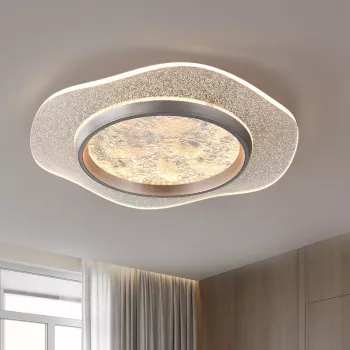
For a refined, uncluttered ceiling presence that suits both elegant bedrooms and focused study areas, consider the Modern Italian Minimalist Ceiling Light – Elegant Bedroom & Study Illumination. It works especially well as the ambient layer in a multi-light setup—supporting softer evenings, brighter daytime routines, and a clean look that doesn’t overwhelm the room’s main furniture and decor.
Complementary Lighting for a Cohesive Room
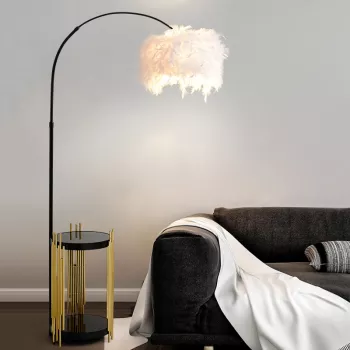
- Floor lamp for softness: A sculptural piece like the Nordic Feather Floor Lamp can create a gentle halo in a reading corner or near a dresser, balancing the overhead light with warmer, lower-angle illumination.
- Bedside lighting: Keep bedside lamps warm and lower-intensity to minimize glare during late-night wake-ups.
- Study task lighting: Use a desk lamp with good diffusion to minimize screen reflections and reduce sharp shadows on the work surface.
FAQ
Is a minimalist ceiling light enough on its own for a bedroom or study?
It can cover general ambient lighting, but the best comfort typically comes from layering. Add bedside or desk task lighting and, if possible, a soft accent light to create depth and flexibility.
What color temperature feels best for an elegant bedroom?
Warm white light around 2700K–3000K is usually the most relaxing. If the room includes a study corner, a neutral range around 3000K–3500K can keep the space versatile without feeling cold.
How can glare be reduced with a ceiling light?
Choose a diffused shade or frosted cover, and avoid overly exposed bright sources in sightlines from the bed. If dimming is available, lower the level in the evening to keep the room comfortable.
Recommended for you









Leave a comment