Raising Independent Kids: Practical Steps to Build Confidence, Responsibility, and Growth
Independence grows in the ordinary moments: choosing clothes, solving a small problem, helping at home, and experiencing natural consequences. With steady routines and age-appropriate freedom, kids can become capable decision-makers without feeling pushed or abandoned. The goal is a simple, repeatable approach that strengthens confidence, responsibility, and healthy autonomy from preschool through the teen years.
What Independence Really Means (and What It Doesn’t)
Independence is the ability to do what’s developmentally appropriate without constant adult prompting. It includes self-care skills, emotional regulation, problem-solving, and following through on commitments.
Independence isn’t “doing everything alone.” It’s knowing when to try, when to ask for help, and how to recover from mistakes. Autonomy grows best alongside connection: warmth, predictable boundaries, and respectful communication. When kids feel safe and supported, they’re more willing to take healthy risks and learn from outcomes.
A Parent’s Role: From Rescuer to Coach
One of the biggest shifts is moving from fixing to coaching. Instead of swooping in, try questions that return ownership: “What have you tried?” “What’s your next step?” “What’s one option you could test?” This keeps the child in the driver’s seat while you stay close enough to guide.
Reinforce effort and learning more than outcomes. Praise strategies (“You broke that into steps”), persistence (“You kept going even when it was annoying”), and repair (“You came back and tried again”). When limits are needed, keep them calm: state the boundary, offer a couple of choices within it, and follow through consistently.
Small, safe struggles are useful. Frustration tolerance is a key ingredient of independence, and it’s built when kids experience challenge, regulate, and keep going with support rather than rescue.
Age-by-Age Independence Goals and Examples
Skills build best when they match a child’s stage. Start with tiny wins, then add complexity as reliability increases.
Preschool (Ages 3–5)
Focus on simple routines (wash hands, put toys away), two-choice decisions, brief independent play, and “helping jobs” that feel real.
Early Elementary (Ages 6–9)
Practice packing a backpack, managing basic hygiene steps, starting a homework routine, and handling small conflicts with guidance.
Tweens (Ages 10–12)
Build planning skills for assignments, simple cooking, managing allowances, and safe neighborhood independence where appropriate.
Teens
Shift toward time management, self-advocacy with teachers/coaches, budgeting, driving or public transit readiness, and digital responsibility with clear boundaries.
Independence milestones by age
| Age range |
Skills to practice |
How to support |
Common parent trap |
| 3–5 |
Dress with help, tidy up, choose between two options |
Visual routines, short instructions, playful practice |
Doing it faster instead of letting them try |
| 6–9 |
Pack daily items, start chores, handle minor problems |
Checklists, “show me” practice, predictable consequences |
Over-reminding and redoing their work |
| 10–12 |
Plan school tasks, basic cooking, manage small money |
Weekly planning meeting, skill-building sessions, clear expectations |
Micromanaging or stepping in too soon |
| 13–18 |
Self-advocacy, time management, budgeting, digital boundaries |
Collaborative agreements, gradual privileges, accountability systems |
All-or-nothing freedom (too tight or too loose) |
Routines That Build Responsibility Without Constant Nagging
Routines reduce reminders because the structure “holds the rule” instead of your voice having to. A practical tool is “when–then”: “When the backpack is packed, then screen time starts.” It’s neutral, predictable, and easy for kids to understand.
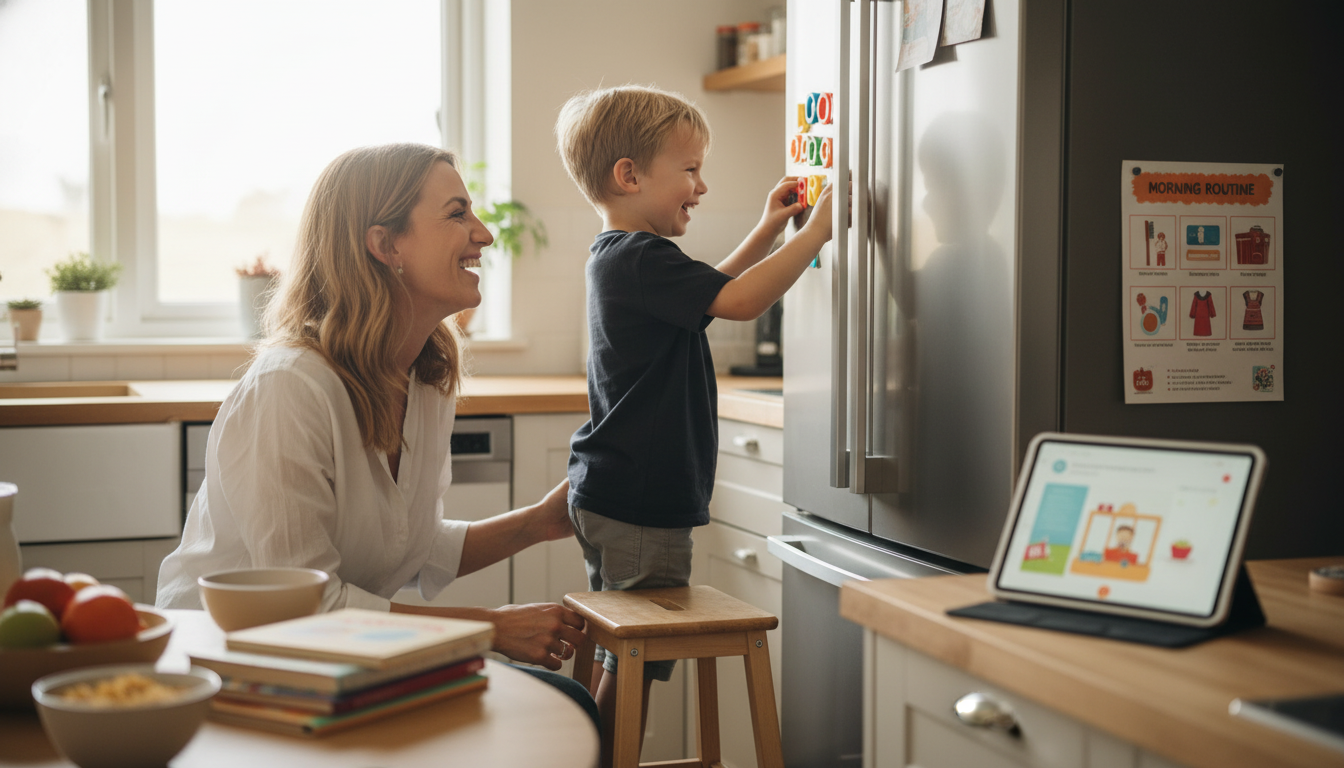
Keep checklists visible and brief: mornings, after school, bedtime. A short list that’s followed beats a perfect list that’s ignored. Assign chores that matter (real contribution), and rotate occasionally so kids learn multiple skills and don’t burn out on the same task forever.
Try a weekly 10-minute family planning check-in: upcoming events, chore assignments, goals, and one skill to practice. Consistency beats intensity here.
Decision-Making Skills: Give Freedom with Guardrails
Confidence Through Competence: Teach Skills in Small Steps
Emotional Independence: Coping Skills Kids Can Use Without a Parent Present
For more evidence-based guidance on resilience and supportive parenting, see the American Psychological Association’s resilience guide and the CDC’s Positive Parenting Tips.
When Independence Looks Like Defiance: How to Respond
A Printable Path: Guided Prompts and Exercises for Daily Use
If you want ready-to-use prompts and step-by-step routines, Raising Independent Kids (digital download eBook) is an easy way to keep your plan consistent across busy weeks.
For a calm, inviting “family check-in” corner, a warm light can help the routine feel less like a meeting and more like connection time. The Nordic Feather Floor Lamp works well near a small table or reading chair. And if cozy comfort makes evening planning more doable, the Romantic Knit Long-Sleeve Fishtail Sweater Dress for Fall and Winter can be a practical at-home option for parents who want something warm while they prep routines and schedules.
FAQ
How do you encourage independence without being permissive?
Pair warmth with clear boundaries: offer choices within limits, follow through consistently, and increase freedom when your child shows reliability. Independence grows best when expectations are predictable and connection stays strong.
What chores are appropriate for building responsibility?
Preschoolers can tidy and help set items in place; elementary kids can pack bags, feed pets, and clear dishes; tweens can do laundry steps and simple meals; teens can manage fuller meal prep and household tasks. Choose chores that meaningfully contribute and attach them to routine times so they don’t depend on reminders.
What if a child gets anxious when asked to do things alone?
Use gradual exposure in small steps, practice when they’re calm, and agree on a coping plan they can use if they get stuck. If anxiety is persistent, escalating, or interferes with school, sleep, or friendships, consult a pediatrician or licensed mental health professional for targeted support.
Recommended for you













Leave a comment