Grounding for Health: A Fun, Practical Checklist for Calm, Clarity, and Energy Balance
Grounding is a simple way to return attention to the present moment when stress, mental overload, or low energy start to take over. Instead of trying to “fix” your mood all at once, grounding helps you get stable enough to take the next helpful step—send the email, finish the drive, fall asleep, or just feel like yourself again. Below is a practical, mix-and-match checklist you can use in real life (at work, at home, or on the go), plus a low-pressure 7-day micro-routine to make it easier to remember when you need it most.
What “grounding” means (and what it isn’t)
Grounding skills are practical techniques that reconnect your attention with the here-and-now through your body, senses, and environment. People often notice less overwhelm, improved focus, and a greater sense of control during stress spikes—not because life suddenly becomes easy, but because the nervous system gets a clearer signal: “I’m here, and I’m safe enough in this moment.”
Grounding isn’t about forcing calm, “emptying your mind,” or pretending you aren’t stressed. It’s about creating enough stability to choose your next action with more intention. These tools can complement therapy, medical care, and healthy lifestyle habits; they’re not a substitute for professional support when symptoms are severe or persistent. For a deeper look at how stress affects the body, see the American Psychological Association’s overview of stress effects.
A quick self-check: pick the right grounding style for the moment
Grounding works best when you match the technique to what’s happening right now:
- If your body feels jittery or tense: try movement-based or breath-based grounding (gentle walking, stretching, paced breathing).
- If thoughts are racing: try sensory or labeling techniques (5-4-3-2-1, naming objects/colors, counting sounds).
- If emotions feel intense: use supportive self-talk plus a physical anchor (hand on chest, feet on floor, temperature change).
- If energy is low or foggy: choose activating grounding (bright light, brisk posture reset, cool water on hands, short outdoor break).
- Aim for “good enough” relief in 1–3 minutes: repeat or switch methods if the first attempt doesn’t land.
Grounding menu: match the technique to how you feel
| How it feels |
Try this |
Time needed |
Helpful tip |
| Anxious, keyed up |
Paced breathing (inhale 4, exhale 6) + feet press |
1–3 min |
Lengthen the exhale to cue a calmer rhythm |
| Racing thoughts |
5-4-3-2-1 sensory scan |
2–5 min |
Speak each item out loud to reinforce focus |
| Overwhelmed |
Name the moment: “This is stress; it will pass” + slow shoulder rolls |
1–2 min |
Keep the language simple and factual |
| Disconnected or numb |
Temperature shift (hold a cool glass, splash water) + look for 3 colors |
1–3 min |
Pair sensation with a visual task |
| Tired, unfocused |
Posture reset + 60-second brisk walk |
1–3 min |
Add sunlight/outdoor air if possible |
The fun, practical grounding checklist (mix-and-match)
Think of this like building a “mini reset” from a few simple ingredients. Pick one item from one category—or stack two categories when you need extra support.
Body anchors (quiet signals of safety)
- Press your feet into the floor for 10 seconds, then release.
- Unclench your jaw; let your tongue rest softly.
- Drop your shoulders away from your ears.
- Lengthen your spine as if a string is gently lifting the crown of your head.
Breath anchors (change the rhythm, change the moment)
If you want a science-backed overview of breath and relaxation approaches, the Harvard Health guide to relaxation and breath control is a helpful starting point.
Sensory anchors (give your brain a concrete job)
Movement anchors (use gentle motion to discharge tension)
Mind anchors (structured thinking, not spiraling)
Connection anchors (safe warmth, simple contact)
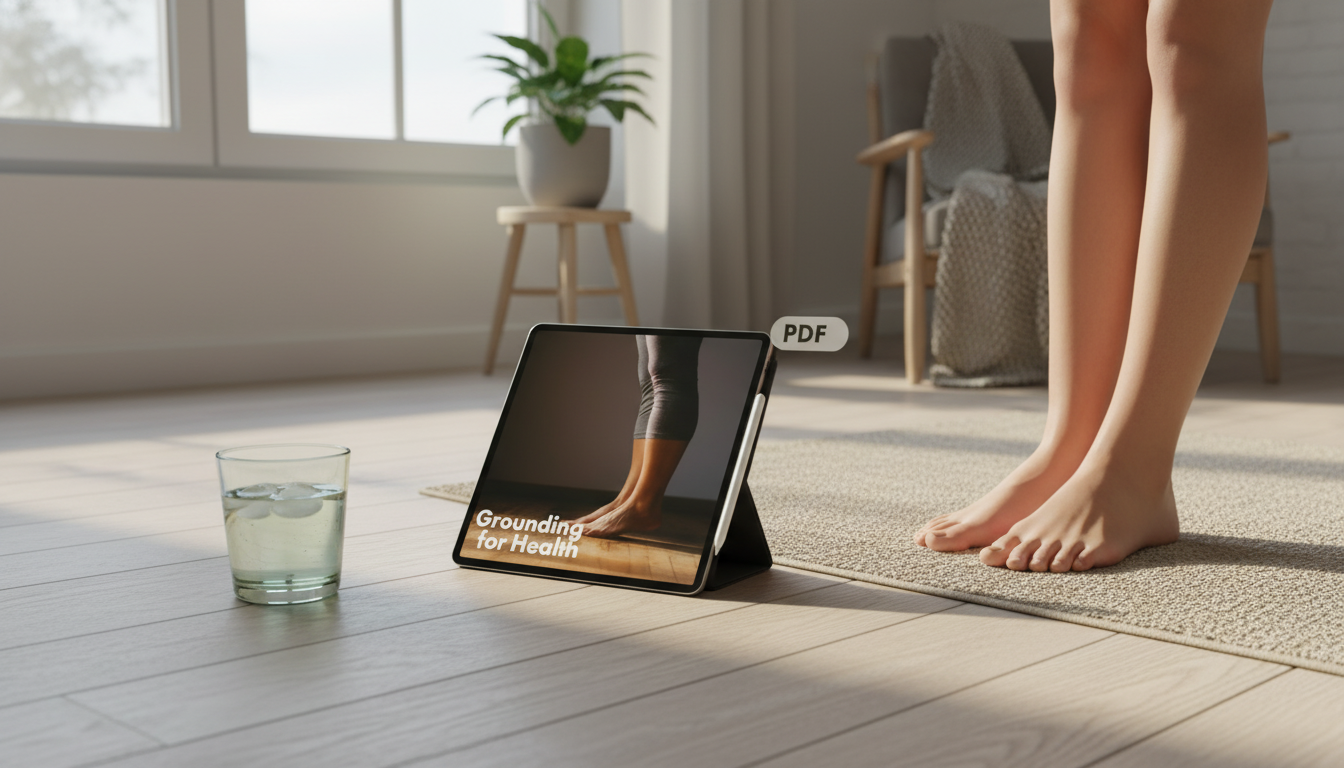
Want a ready-made, phone-friendly menu you can tap in the moment? Try Grounding for Health: Your Fun & Practical Checklist, a simple digital guide designed for quick “pick one” resets.
Build a 7-day micro-routine (without adding pressure)
Track lightly: notice intensity before/after (0–10) and whether focus, breathing, or muscle tension changed. For additional relaxation method ideas, the National Center for Complementary and Integrative Health (NCCIH) summarizes common techniques in an easy, practical way.
Common obstacles (and quick fixes)
Make it portable: a digital checklist that keeps it simple
To make your space feel more “settling” during a reset, soft lighting can help—especially for evening routines. If you’re creating a calm corner at home, consider the Nordic Feather Floor Lamp for gentle ambient light, or pair comfort with your wind-down routine using the Romantic Knit Long-Sleeve Fishtail Sweater Dress for cozy, cue-based relaxation.
FAQ
What is the fastest grounding technique for stress?
Try a 10-second feet press paired with a longer exhale (inhale 4, exhale 6). Other fast options include the 5-4-3-2-1 sensory scan or a quick temperature change like cool water on your hands; repeating for 1–3 minutes often helps.
Can grounding help with anxiety and overthinking?
Yes—grounding shifts attention from “what if” loops to present-moment cues (breath, sensation, environment), which can reduce spiraling and support regulation. For example, naming five neutral facts in the room while slowing your exhale can interrupt overthinking long enough to choose a calmer next step, and it can complement professional care when anxiety is persistent.
How often should grounding be practiced?
Practice briefly when you’re already calm (even once a day) so it feels familiar, then use it as needed during stress. Keep notes on what works best for different moods and build a small routine you can repeat without effort.
Recommended for you













Leave a comment