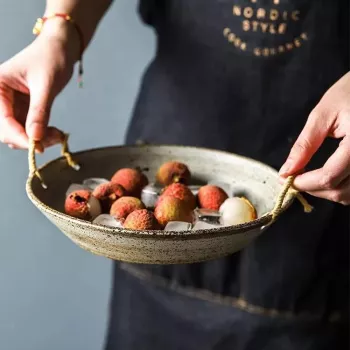
A coarse pottery dinner plate brings a grounded, tactile feel to the table—substantial in the hand, quietly expressive in glaze and texture, and designed to make everyday meals feel intentional. This handmade Japanese-style plate stands out with a rope handle detail that adds character and makes carrying, plating, and displaying more effortless.
If you’re drawn to ceramics that look calm but never boring, coarse pottery is an easy upgrade: it frames food with earthy warmth, leans into natural variation, and fits right in with minimalist, rustic, and wabi-sabi-inspired spaces. For a closer look at the item featured here, visit the Handmade Japanese Coarse Pottery Dinner Plate with Rope Handle product page.
What Makes This Plate Distinct
Some plates disappear into the background. This one is meant to be noticed—without shouting. Its appeal comes from the small, human touches that only show up when a piece is shaped and finished by hand.
- Handmade character: subtle variations in shape, glaze flow, and speckling create an organic, one-of-a-kind look.
- Coarse pottery texture: a more rugged clay body and tactile surface that pairs well with rustic, minimalist, and wabi-sabi interiors.
- Rope handle accent: an eye-catching detail that also helps with grip when moving the plate from kitchen to table.
- Dinner-plate presence: designed to anchor a place setting and frame food with a warm, earthy backdrop.
- Display-friendly: doubles as countertop décor, open-shelf styling, or a serving piece for gatherings.
Materials, Finish, and the Feel of Coarse Pottery
Coarse pottery is loved for its honesty—what you see is the clay doing what clay does. Instead of a perfectly uniform surface, you get depth: tiny specks, tonal shifts, and a texture that feels calming and lived-in.
- Clay body and texture: coarse pottery often features visible grain, natural speckling, or small irregularities that add depth rather than looking “imperfect.”
- Glaze and surface: expect a matte-to-satin look, subtle pooling, and tonal shifts that can change depending on lighting.
- Weight and stability: a heavier feel can help the plate sit firmly on the table and make serving feel more secure.
- Rope detail considerations: decorative rope elements can be natural fiber or styled to look like rope; keeping it clean and dry preserves appearance over time.
- Visual pairing: works especially well with linen napkins, wood chargers, bamboo utensils, and neutral-toned ceramics.
Quick Snapshot
| Detail |
What to Expect |
| Style |
Handmade Japanese-inspired coarse pottery with rope handle detail |
| Best for |
Everyday plating, rustic entertaining, shelf display |
| Look and feel |
Earthy, textured, handcrafted variation |
| Care focus |
Gentle cleaning; protect rope detail from prolonged moisture |
| Availability |
In stock |
For deeper cultural context on ceramics traditions, the Smithsonian Center for Folklife and Cultural Heritage is a helpful starting point for understanding how regional craft values shape everyday objects.
When choosing serveware for daily use, it’s also worth being aware of general guidance around food-contact materials; the U.S. Food & Drug Administration (FDA) information on food contact substances offers a clear overview of how food-contact safety is evaluated in the U.S.
Ways to Use It: From Weeknight Meals to Entertaining
A plate like this earns its keep because it moves easily between roles: dinner plate, shareable platter, and styling base. The texture and earthy tone tend to make food look more vibrant—greens look greener, glossy sauces look richer, and simple rice dishes feel elevated.
- Everyday dinner plate: ideal for rice bowls, noodle dishes, grilled vegetables, and composed salads—foods that look great against earthy tones.
- Serving platter feel: use as a shared plate for pastries, fruit, dumplings, or tapas-style small bites.
- Layered place setting: stack with a smaller side plate or bowl to add dimension without visual clutter.
- Coffee-table styling: place candles, a small vase, or seasonal décor on it as a textural base.
- Gifting: a thoughtful option for housewarmings or weddings when paired with tea towels or artisanal chopsticks.
Care and Handling for Long-Lasting Beauty
Handmade pottery tends to reward gentle habits. A little care helps keep the surface looking clean and the rope detail looking crisp—especially if it’s a natural-fiber element or a textured decorative feature that can trap moisture.
Styling Ideas: Pairings That Make the Texture Pop
To bring that soft, atmospheric glow into the space around your table, consider pairing the setting with the Nordic Feather Floor Lamp—a statement piece that complements natural materials and warm-toned ceramics.
Price, Availability, and What’s Included
The Handmade Japanese Coarse Pottery Dinner Plate with Rope Handle is currently listed at $45.67 (USD) and is in stock (150 listed units). The product page includes images and purchase details, along with a reminder that handmade ceramic pieces naturally vary.
More In-Stock Picks to Complete the Look
FAQ
Is the rope handle functional or mainly decorative?
It can help with grip and presentation, especially when carrying the plate from kitchen to table, but it should be treated gently. Avoid soaking the rope detail and dry it thoroughly after cleaning to help preserve its look over time.
How should handmade coarse pottery be cleaned and stored?
Use mild soap and a non-abrasive sponge, then dry thoroughly—especially around textured areas and the rope handle. If stacking pieces, place a soft liner between them to prevent scuffs and surface marks.
Will the plate look exactly like the photos?
No—handmade coarse pottery typically varies in glaze tone, speckling, and texture from piece to piece. Those differences are part of the plate’s character and make each one feel unique.
Recommended for you











Leave a comment